Major Corporate Frauds and the Audit Response
Abstract
Yeh chapter das badi corporate frauds ka audit ke nazariye se adhyayan karta hai: Enron, WorldCom, Satyam, Wirecard, Luckin Coffee, Toshiba, Valeant/Philidor, Carillion, Parmalat aur Olympus. Har case me ek hi prashn poochha gaya hai: fraud kahan chhupa tha, kis procedure se pakda ja sakta tha, aur kisne use pakda. Cases ko mechanism ke hisab se chaar samoohon me baanta gaya hai: chhupe hue liabilities, kharch ka capitalisation aur estimates, kalpanik cash, aur kalpanik revenue. Chapter ke ant me comparison table, worked problems aur review questions diye gaye hain. Saari company figures public sources se li gayi hain aur notes me numbered hain.
Learning objectives
Is chapter ke baad reader:
- define kar sakega ki fraud, professional skepticism aur reasonable assurance ka audit me kya arth hai;
- distinguish kar sakega fraudulent financial reporting aur misappropriation of assets me;
- evaluate kar sakega ki har case me kaunsa audit procedure (bank confirmation, journal entry testing, analytical procedures, related party inquiry) fraud pakad sakta tha;
- compute kar sakega source figures se simple derived measures, jaise WorldCom ka adjustment ya Satyam ka per-head payroll outflow;
- identify kar sakega red flags aur unhe SA ke relevant standard se jod sakega;
- compare kar sakega ki alag-alag frauds kisne aur kaise pakde: internal audit, journalist, short seller, whistleblower, regulator ya khud management.
16.1 Introduction and research question
Pichhle chapters me audit ki process, evidence aur internal control padhe gaye. Is chapter ka prashn yeh hai: jab audit fail hota hai, to kahan fail hota hai? Isse do upyog hain. Pehla, har case ek concrete example deta hai ki audit standards ka koi paragraph vyavhaar me kya matlab rakhta hai. Doosra, cases ke beech common patterns milte hain jo exam me aur practice me red flags ka kaam karte hain.
Yeh chapter sirf wahi company tathya use karta hai jinka source note me diya gaya hai. Jahan kisi number ka source nahi mila, number nahi likha gaya. Alleged (aaropit) aur proven (siddh) baaton ko alag rakha gaya hai.
16.2 The audit framework behind the cases
16.2.1 Fraud, skepticism and reasonable assurance
Fraud ka arth hai jaanbujh kar kiya gaya misstatement ya chori. SA 240 fraud ke sandarbh me auditor ki zimmedari batata hai.[19] Standard ke mutabik fraud ke do broad prakaar hain: fraudulent financial reporting (financial statements ko jaanbujh kar galat dikhana) aur misappropriation of assets (asset ki chori). Is chapter ke zyadatar cases pehle prakaar ke hain.
Professional skepticism ka arth hai ek sawal poochhne wala dimaag aur evidence ka critical assessment. SA 200 isse auditor ke attitude ka hissa maanta hai.[19] Skepticism ka matlab har cheez par shak ya jhagda nahi hai. Matlab yeh hai ki jab tak saboot na mile, management ke kathan ko final nahi maana jata.
Reasonable assurance ka arth hai ki auditor yeh moderate level ka vishwas deta hai ki financial statements me material misstatement nahi hai, chahe galti se ho ya fraud se, par 100 percent guarantee nahi di jati. Fraud rokna management ki zimmedari hai. Auditor ki zimmedari hai ki wo risk assess kare aur procedures kare.
16.2.2 What SA 240 asks the auditor to do
SA 240 ki core requirements me yeh shamil hain: engagement team ke beech fraud par charcha, fraud risk assessment, revenue recognition me presumed fraud risk, aur management override of controls par procedures.[19] Yeh standard number source chapter ke likhne wale ki jaankari se hain aur ICAI ki SA list se verify nahi kiye gaye (rewrite notes dekhein).
Audit risk model batata hai ki AR = IR x CR x DR, yani audit risk inherent risk, control risk aur detection risk ka guna hai. Jin cases me top management hi control override kar sakta tha, wahan control risk bahut upar tha, kyunki controls un logon ke saamne kamzor hote hain jo unhe design karte hain.
16.2.3 Three recurring patterns
Bade frauds me teen patterns baar baar milte hain:
- Fake ya inflated numbers: revenue, cash ya profit asli se zyada dikhana (Satyam, Luckin, Toshiba, Wirecard).
- Chhupa hua karza ya nuksaan: debt ko alag entities me daalna (Enron).
- Kamzor audit evidence: sirf management ke kaagaz par bharosa, bahar se confirmation nahi (Satyam, Wirecard).
Critical discussion
Ek limitation yeh hai ki jab fraud collusive ho, yani management aur third parties milkar kare, to external confirmation bhi fail ho sakta hai. Wirecard me trustee aur escrow cash ka prashn isi limit ko dikhata hai (section 16.5). Doosri baat: in cases me bahut logon ko red flags dikhe hoge, par aam taur par chup rehna aasan hota hai. Isliye audit ki sabse badi taakat technique se zyada auditor ka saahas aur independence hai. Exam me yeh point aksar "auditor ki zimmedari" ke roop me poochha jata hai.
16.3 Concealed liabilities and losses: Enron, Olympus and Carillion
16.3.1 Enron (USA, 2001)
Enron pehle gas pipeline company thi, phir energy contracts ke trading me badli. Uska bankruptcy us waqt US ka sabse bada corporate bankruptcy tha, assets $63.4 billion ke.[1] Share price August 2000 ke US$90.75 ke high se November 2001 ke ant tak $1 se neeche aa gaya.[1] Shareholders ne $40 billion ka mukadma kiya aur baad me unhe $7.2 billion partially mile.[1] 1996 se 2000 ke beech revenue $13.3 billion se badhkar $100 billion se upar report hua, yani 750 percent se zyada ki vriddhi.[1]
Mark-to-market accounting ka arth hai future contract ka estimated profit aaj hi income me dikhana. Enron pehli non-financial company thi jisne complex long-term contracts par yeh method use kiya.[1] Isme paise abhi nahi aaye hote, par profit dikh jata hai, isliye yeh management ke estimates par poora nirbhar karta hai.
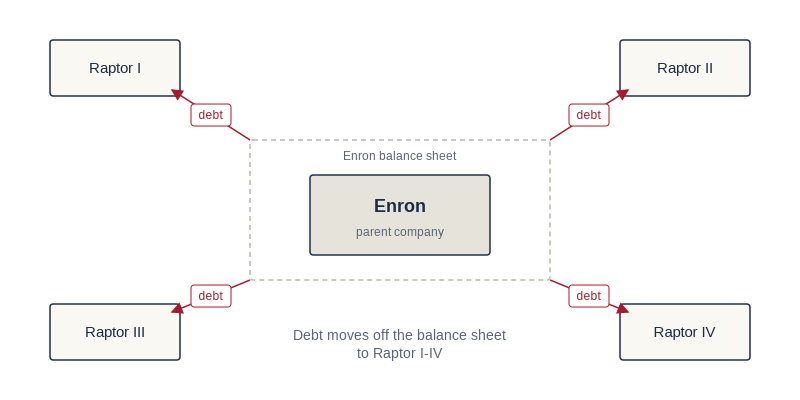
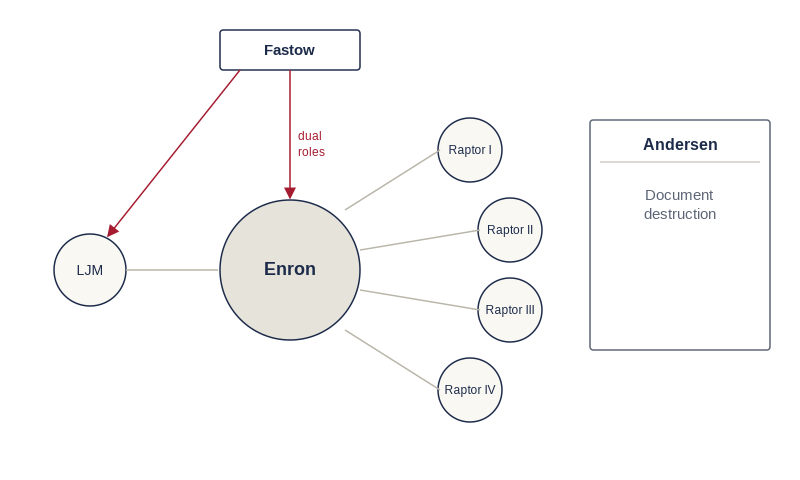
Special purpose entity (SPE) ek alag legal entity hoti hai jo kisi khaas uddeshya ke liye banti hai. Enron ne apne liabilities ko aisi entities me transfer kiya taaki balance sheet saaf dikhe. Raptor entities me $1.2 billion se zyada ke assets transfer kiye gaye, aur ek treatment hatane se net shareholders' equity me $1.2 billion ki kami aayi.[1] Autumn 2001 me Chewco aur JEDI ka purana accounting treatment band karna pada. Isse 1997 se mid-2001 tak reported earnings $405 million kam hui aur debt $628 million badha.[1] 2000 ki report me swaps par $500 million ka gain dikhaya gaya, jabki portfolio ki value $1.1 billion gir chuki thi.[1] Chewco aur LJM me CFO Fastow ki double role thi: wo company ke officer bhi the aur un partnerships ke bhi jinse company transactions karti thi.[1]
Timeline.
| Date | Event |
|---|---|
| 20 Sep 2000 | WSJ reporter Jonathan Weil ka mark-to-market article; short-seller Jim Chanos ne 10-K padhi |
| 15 Aug 2001 | Sherron Watkins ka anonymous letter Lay ko |
| 22 Oct 2001 | Fastow ne LJM se $30 million kamane ki baat batayi; share $20.65 |
| 25 Oct 2001 | Fastow CFO pad se hataye gaye |
| 2 Dec 2001 | Chapter 11 bankruptcy |
| 10 Jan 2002 | Andersen ne Houston me document destruction ka announcement kiya |
| 15 Jun 2002 | Andersen obstruction of justice me convicted |
| 31 Aug 2002 | Andersen ne CPA licenses surrender kiye |
| 31 May 2005 | Supreme Court ne conviction reverse ki |
Table ke tathya Enron aur Arthur Andersen ke Wikipedia pages se hain.[1][2]
Auditor ka anjaam. Arthur Andersen ko SEC jaanch se jude documents nasht karne ka doshi paya gaya, jisse public companies audit karne ka license gaya. Supreme Court ne baad me faisla palat diya, par tab tak firm ke zyadatar clients ja chuke the.[1][2] Andersen ke 28,000 employees (2002) ghat kar 2005 tak lagbhag 200 reh gaye.[2] Kenneth Lay convicted hue par sentence se pehle unki mrityu ho gayi; Jeffrey Skilling ko prison ki saza mili.[1] Result me Sarbanes-Oxley Act aaya, jisme records nasht ya fabricate karne par saza badhayi gayi, aur official proceeding me badha dalne ka provision Enron ke jawab me bana.[1][3]
Critical discussion. Teen lessons audit ke liye hain. Pehla, substance over form: SPE ka ownership aur control dekho, sirf legal form nahi. Doosra, related party transactions: jab CFO khud partnerships chala raha ho, to yeh conflict of interest hai (SA 550). Teesra, independence: audit fees ke saath bade consulting fees (Chapter 4). Exam trap: Andersen ki conviction ka final result reversal tha (2005), par license surrender 2002 me ho chuka tha. Dono baatein alag hain.
16.3.2 Olympus (Japan, 2011)
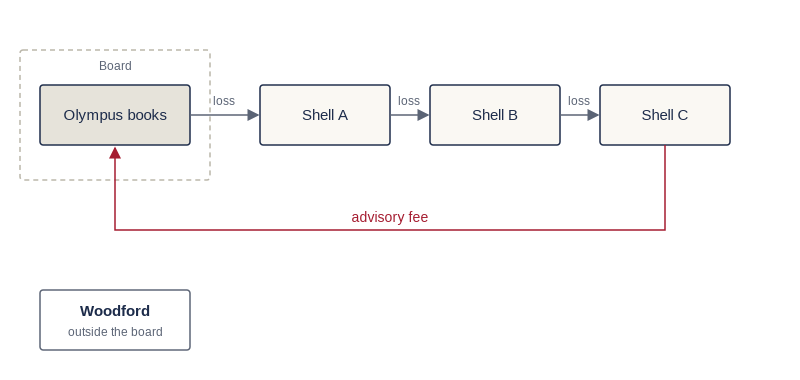
Michael Woodford ko Olympus ka president bane 6 mahine hue the. October 2011 me usne sawal uthaye aur 14 October 2011 ko use hata diya gaya; board meeting me use bolne ya vote karne nahi diya gaya.[18]
Tobashi ka arth hai nuksaan ko ek entity se doosri me "udaa" dena taaki wo balance sheet me na dikhe. Company bad investments ke losses ko doosri entities me daalti thi aur baad me acquisition fees ke naam par paisa wapas bharti thi. Gyrus acquisition ($2 billion ka cost) me advisors Axes America aur Axam ko $687 million "success fee" di gayi.[18] Itna bada fee deal size ke mukable asaamanya hai, isliye red flag hai.
Concealed investment losses aur fees ka figure shuru me ¥117.7 billion ($1.5 billion) bataya gaya. Baad me ek investigators ke memo me, jo New York Times ne report kiya, ¥481 billion ($6.25 billion) ka figure aaya.[18] Dono figures alag sources ke hain, isliye exam me "reports ke mutabik" likhna theek hai.
| Date | Event |
|---|---|
| 2008 | Gyrus acquisition (cost $2 billion); teen domestic firms ¥73.5 billion me |
| 1 Apr 2011 | Woodford president/COO bane |
| 30 Jul 2011 | FACTA article |
| 1 Oct 2011 | Woodford CEO bane |
| 14 Oct 2011 | Woodford ko hataya gaya |
| 8 Nov 2011 | Company ne "inappropriate" accounting maani |
| Jan 2012 | Third-party panel report |
| Jul 2013 | Kikukawa aur Mori ko sentence; source ke mutabik teen saal ki saza, paanch saal ke liye suspended |
Tathya Olympus scandal page se hain.[18]
Audit failure. Source ke mutabik KPMG ne Gyrus ke accounting par aapatti jatayi, phir Olympus ne EY ko le aaya. Gyrus ke auditors ne "circumstances connected with our ceasing to hold office" wala letter diya. Auditor change aur resignation ek classic red flag hai.[18] Company ke internal panel ne KPMG aur EY ko clear kiya aur kaha ki scheme "too well concealed" thi.[18] Woodford ko 2012 me £10 million damages mile.[18]
Critical discussion. Jab auditor badla jata hai, naya auditor predecessor auditor se professional communication kare aur reasons samjhe. Whistleblower ki suraksha bhi governance ka hissa hai. Dhyan rahe ki panel ka "too well concealed" kehna auditor ko doshi na thehrane ka tark hai; yeh conclusion exam me independent tark ke bina nahi likhna chahiye.
16.3.3 Carillion (UK, 2018)
Carillion UK ki doosri sabse badi construction company thi, 2016 me uske 43,000 employees the. 15 January 2018 ko wo compulsory liquidation me gayi.[15] Parliamentary report ne directors par financial reality "misrepresent" karne ka aarop lagaya. Baad me FCA ne teen directors par kul £600,000 se zyada ka fine lagaya aur FRC ne do par £280,000 se zyada ka.[15] Auditor KPMG par parliamentary inquiries ne sawaal uthaye. Source ke mutabik Big Four ne Carillion se in saalon me kul £72 million fees kamaye.[15]
| Date | Event |
|---|---|
| Jul 1999 | Tarmac se demerger me Carillion bani |
| Mar 2015 | UBS analyst ne extended supplier payment terms aur reverse factoring par sawaal uthaya |
| 10 Jul 2017 | £845 million impairment charge; CEO Howson ka step down |
| 29 Sep 2017 | H1 2017 loss £1.15 billion |
| 17 Nov 2017 | Covenant breach warning; share 50 percent se zyada gira |
| 15 Jan 2018 | Compulsory liquidation |
| Apr 2018 | Official Receiver: liabilities £6.9 billion |
| May 2018 | Parliamentary report |
Source: Carillion page.[15] Official Receiver ke figure ko source teen guna zyada bataata hai 2016 ke accounts se.
Reverse factoring. Reverse factoring (supply chain finance) me bank supplier ko jaldi payment kar deta hai aur buyer bank ko baad me deta hai. Agar yeh arrangement balance sheet me "trade payables" ke roop me chhupa rahe, to debt kam dikhta hai. UBS analyst ne 2015 me kaha ki Carillion reported se zyada leveraged hai.[15] IASB ne 25 May 2023 ko supplier finance arrangements ke disclosure requirements jaari kiye (IAS 7 aur IFRS 7 amendments).[16] Carillion ke apne accounts me exact treatment is chapter ke sources se verify nahi hua, isliye yahan sirf concept padhein.
Audit angle. Teen sawaal uthte hain. Pehla, going concern: 2017 me kitne warning signals aaye. Doosra, pension deficit ka disclosure, jo reports ke mutabik lagbhag £580 million tha. Teesra, receivables aur contract revenue: Msheireb (Doha) project me Carillion ne £200 million owed bataya, jise Msheireb Properties ne dispute kiya.[15]
Fallout. Lagbhag 30,000 suppliers par karib £1 billion ka bakaya, 27,000 pension members, 2,787 redundancies (August 2018 tak), 13,945 jobs transfers se bache, aur Barclays ko £127 million ka nuksaan.[15]
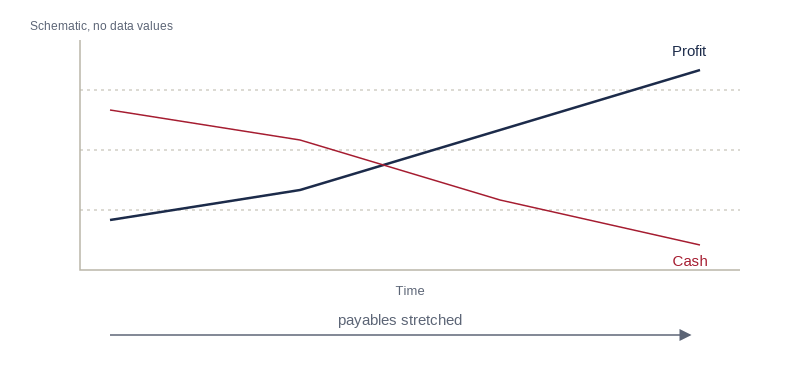
Critical discussion. Carillion ke case me fraud aur kharab business ke beech ki line dhundhli hai. Regulators ne directors par misreporting ke aadhar par fine lagaya, jo ek aur sanket hai ki sirf business failure nahi tha. Exam trap: going concern par auditor ko tab sawaal uthana chahiye jab profit warnings, covenant breach aur cash outflow teeno ek saath dikhein. Profit aur cash flow alag cheezein hain; percentage-of-completion revenue par bharosa tab tak kamzor hai jab tak cash na aaye.
16.4 Capitalised expenses and estimates: WorldCom and Toshiba
16.4.1 WorldCom (USA, 2002)
Capitalisation of expenses ka arth hai ek revenue kharch ko asset ke roop me balance sheet par daalna, jisse current profit badh jata hai. WorldCom ne line costs ke saath yahi kiya. Mississippi ke Clinton me ek chhoti internal audit team ne server activity se bachne ke liye raat me kaam shuru kiya aur basic T accounts banaye.[11]
Internal audit ko "prepaid capacity" ki 49 entries mili, jinme kul $3.8 billion line cost expense accounts se balance sheet ke asset accounts me gaye. In entries ke bina Q1 2002 ka reported $130 million profit $395 million ke loss me badal jata.[11] Kuch entries par "SS entry" label tha, yaani CFO ki seedhi directions. Accounting director Betty Vinson ne bina supporting documents dekhe entries ki thi. Myers ne maana ki entries "based on what we thought the margins should be" book hui thi, GAAP me koi basis nahi tha.[11]
| Date | Event |
|---|---|
| Dec 2000 | Analyst Kim Emigh ne capital expenditure ke naam par labour allocate karne ka objection uthaya; baad me March 2001 me laid off |
| Late May 2002 | Internal audit ka capital expenditure audit |
| 10 Jun 2002 | Audit team ko "prepaid capacity" entries mili (Q3 2001 se Q1 2002) |
| Mid Jun 2002 | CFO Sullivan ne audit postpone karne ko kaha |
| 20 Jun 2002 | Audit Committee meeting; KPMG ne kaha GAAP me justification nahi |
| 25 Jun 2002 | Myers ne resign kiya, Sullivan terminate hue |
| 25 aur 26 Jun 2002 | 25 June ko SEC ko earnings restate karne ki baat batayi (pichhle paanch quarters, income $3.8 billion zyada); 26 June ko SEC ne civil fraud charges lagaye |
| 21 Jul 2002 | Chapter 11 bankruptcy |
| 2005 | Ebbers fraud me guilty; 25 saal ki saza |
Tathya WorldCom scandal page se hain.[11]
Audit failure. Pehle Arthur Andersen auditor tha. Andersen ke former lead partner Kenny Avery ko "prepaid capacity" term hi samajh nahi aaya, aur Andersen ne is area ke capital expenditures test hi nahi kiye the. Baad me KPMG ne Andersen ki Jackson practice kharid kar account liya.[11] Management ne audit rokne ke emails bheje. Sabse mahatvapurn tathya yeh hai ki fraud ko external auditor ne nahi, internal audit ne pakda.[11]
Critical discussion. Teen cheezein ubharti hain. Pehli, journal entry testing: round-number, quarter-end aur top-side entries ko target karna. Doosri, capex aur revenue expenditure ka fark: kharcha tab asset banta hai jab future economic benefit ka saboot ho. Teesri, internal audit ka audit committee tak seedha raasta hona chahiye. Exam trap: "WorldCom me fraud kisne pakda" ka uttar internal audit hai, external auditor nahi.
16.4.2 Toshiba (Japan, 2015)
May 2015 me Toshiba ne announce kiya ki accounting investigation chal rahi hai aur pichhle teen saal ke profits revise karne pad sakte hain.[10] 21 July 2015 ko CEO Hisao Tanaka ne resign kiya, saath me 8 aur senior officials ne, jinme do pichhle CEO the. Profits pichhle saat saal me $1.2 billion se inflate hue the. Toshiba ke subsidiary Westinghouse ne 2017 me bankruptcy file ki.[10] Resignation ko company ke 140 saal ke itihas ka sabse damaging event bataya gaya. Baad me company ko Japan ke best-company stock index se hataya gaya, aur May 2016 me Satoshi Tsunakawa naye CEO bane.[10]
Toshiba ke Wikipedia page ka accounting scandal section chhota hai, aur third-party committee ki report fetch nahi hui, isliye yahan detail sirf wahi hai jo source se mila. Mazeed jaankari ke liye official committee report aur SEC ya FSA pages dekhne chahiye.
Audit angle. Long contracts me estimated costs ko kam dikhana aasan hota hai, isliye estimates par hindsight review aur independent technical input chahiye (SA 540).[19] Source ke mutabik pressure ka arth fraud triangle ka pehla kona hai; iska vistaar Chapter 17 me hai.
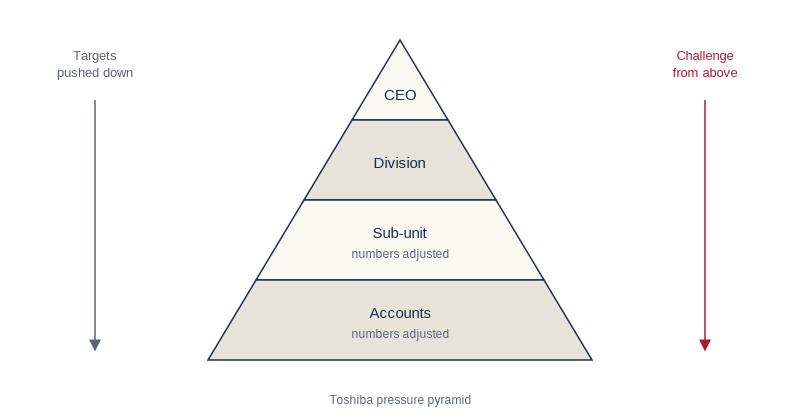
Critical discussion. Jab top level par targets tay hon aur neeche ke levels par numbers adjust hon, to internal control "paper par" rahta hai. Yeh management override of controls ka udaharan hai, jo internal control ki inherent limitation hai. Enron, Toshiba aur Satyam teeno me yeh dikhta hai. Auditor ko tone at the top aur whistleblower channel ka audit committee tak seedha hona dekhna chahiye.
16.5 Fictitious cash: Parmalat and Wirecard
16.5.1 Parmalat (Italy, 2003)
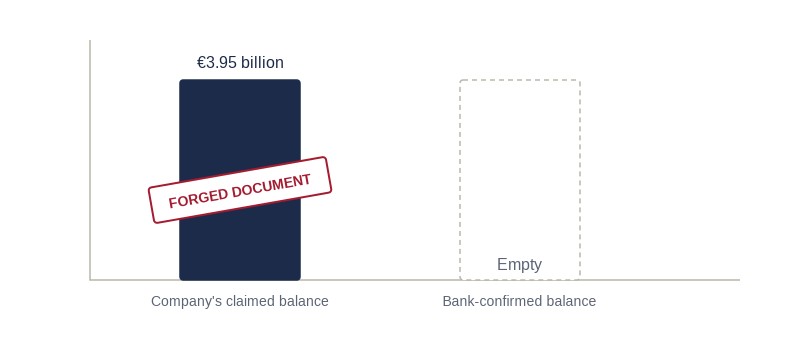
Parmalat ki sthapna 1961 me Calisto Tanzi ne 22 saal ki umar me ki thi. 2002 me iske 30 deshon me 30,000 se zyada employees the.[17] Bank of America ne ek document ko forgery bataya, jo Bonlat (Cayman subsidiary) ke account me €3.95 billion dikhata tha.[17]
| Date | Event |
|---|---|
| 1961 | Tanzi ne Parma me plant khola |
| 1990 | Milan stock exchange me listing |
| 22 Apr 2002 | Share record par; valuation €3.7 billion |
| Feb 2003 | CFO Tonna ka achanak €300 million bond announce |
| Sep 2003 | €300 million fundraising plan dropped |
| Late Dec 2003 | Insolvency; Tanzi arrested; €8 billion hole admitted |
| Baad me | Auditors ke hisab se debt €14.3 billion |
| 2008 | Tanzi ko 10 saal ki saza (BBC, Dec 2008) |
Tathya Parmalat page se hain.[17]
Mechanism. Naye CFO Ferraris ko pata chala ki kuch books uski pahunch se bahar chief accounting officer ke paas hain. Usne shak kiya ki total debt balance sheet se do guna zyada hai. Bonlat aur Epicurum fund ke transactions par sawaal uthe. Aakhir me debt €14.3 billion nikla, jo source ke mutabik originally bataye gaye se lagbhag aath guna tha.[17] Parmalat ne credit-linked notes khud ko bech kar "asset" bana liya, yani apni creditworthiness par daav lagakar hawa se asset paida kiya.[17]
Settlements. Deloitte ne 2007 me $149 million, Bank of America ne 2009 me $100 million aur Grant Thornton International ne $4.4 million settle kiya. Naye management ne lagbhag $700 million recover kiye.[17]
Critical discussion. External confirmation ka evidential value tab hota hai jab request auditor bheje aur jawab seedha auditor ko aaye. Agar management ke haath se guzre, to forgery aasan hai. Offshore subsidiary (yahan Cayman) complex group structure ka high-risk hissa hai. Dhyan rahe ki Parmalat ki bank confirmation ka exact process source me nahi diya gaya; isliye is kathan ko concept ke roop me padhein, kisi tathya ke roop me nahi.
16.5.2 Wirecard (Germany, 2020)
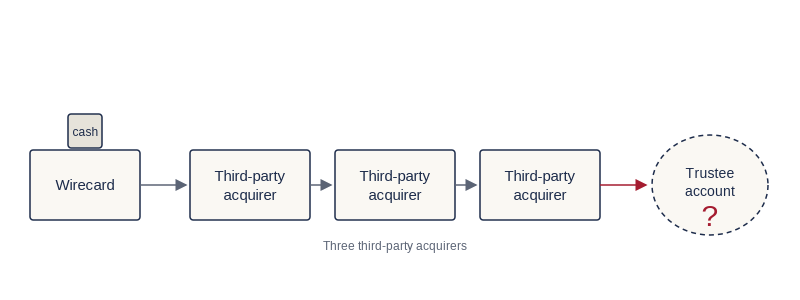
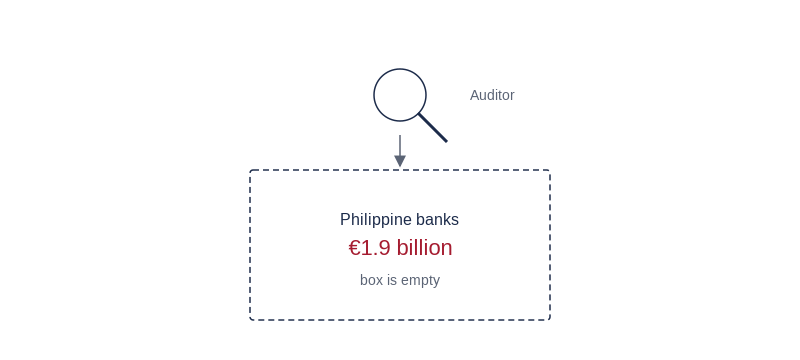
Wirecard Germany ki digital payments company thi. 25 June 2020 ko usne insolvency file ki jab bataya ki €1.9 billion "missing" hain, aur CEO Markus Braun ki arrest hui.[7] German regulator BaFin ki naakami aur auditor Ernst & Young (EY) ki possible malpractice par sawaal uthe.[7] 2019 ki reports ke mutabik worldwide revenue ka aadha aur lagbhag poora profit teen opaque, kam audit hue third-party processors se aata tha.[7] 2015 me ek India payments group €340 million me kharidi gayi; ek jaanch ke mutabik kam se kam €175 million seller ko transfer nahi hue.[7] COO Jan Marsalek firing ke baad ghayab ho gaya; wo Europol ki most-wanted list aur Interpol Red Notice me hai.[7]
Jinhone pakda. FT Alphaville ne April 2015 se, Zatarra report February 2016 me, aur 30 January 2019 ko FT ne forged contracts aur round-tripping ka shak jataya.[8] BaFin ne 18 Feb 2019 se 18 April 2019 tak short selling ban kiya, aur short sellers par hi investigations khuli, jo March 2020 me drop hui.[8]
| Date | Event |
|---|---|
| 2002 | Markus Braun CEO bane |
| 30 Jan 2019 | FT article: forged contracts aur round-tripping ka shak |
| 28 Apr 2020 | KPMG: sufficient documentation nahi mila; share 26 percent gira |
| Jun 2020 | €1.9 billion "missing"; share 72 percent se zyada gira |
| 22 Jun 2020 | Braun arrested |
| 25 Jun 2020 | Insolvency filing |
| 8 Dec 2022 | Trial shuru |
Tathya Wirecard page se hain.[8] Source ke do hisse Braun ki arrest ko alag tareeke se rakhte hain; yahan Part B wali tithi 22 June use ki gayi hai.
Naye tathya. EY ne kaha ki Wirecard ke ek trustee ne auditor ko "deceive" karne ki koshish ki. Philippines ke do banks ne kaha ki unke paas yeh paisa kabhi tha hi nahi. Pav Gill (Singapore legal counsel) ne 20 May 2021 ko khud ko whistleblower bataya.[8] KPMG ki "special audit" aur EY ki "statutory audit" alag hain: KPMG ne special investigation ki, EY statutory auditor tha.[8]
Critical discussion. Wirecard ka sawal yeh hai ki trust ya escrow account ke cash ka saboot kis party se liya gaya aur wo party kitni independent thi. SA 505 ke mutabik confirmation request auditor ke control me honi chahiye aur jawab seedha auditor ko aana chahiye.[19] Jab confirm karne wala hi collusion me ho, to yeh bhi fail ho sakta hai, isliye bank ke existence aur license ki alag check zaroori hai. Doosra, acquisitions me payment trail dekhein: paisa seller tak gaya ya nahi (SA 500). Teesra, whistleblower reports risk assessment me daalein (SA 315), aur complex groups me component auditors ka coordination zaroori hai (SA 600).[19]
16.6 Fictitious revenue and related parties: Luckin Coffee and Valeant
16.6.1 Luckin Coffee (China, 2020)
2 April 2020 ko company ne bataya ki COO Jian Liu ne 2019 ki sales lagbhag RMB 2.2 billion (US$310 million) fabricate ki thi.[9] Fabricated sales ka tareeka aam taur par related parties ke through hota hai: wo "customer" ban jate hain, bills banti hain aur paisa ghoom kar wapas aata hai. Yeh vyakhya concept ke roop me hai; Luckin me exact mechanism ke liye internal investigation ki report dekhein.
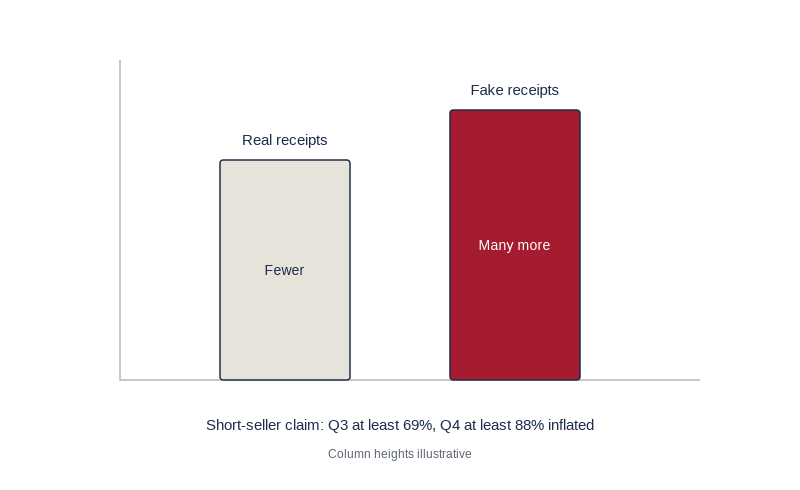
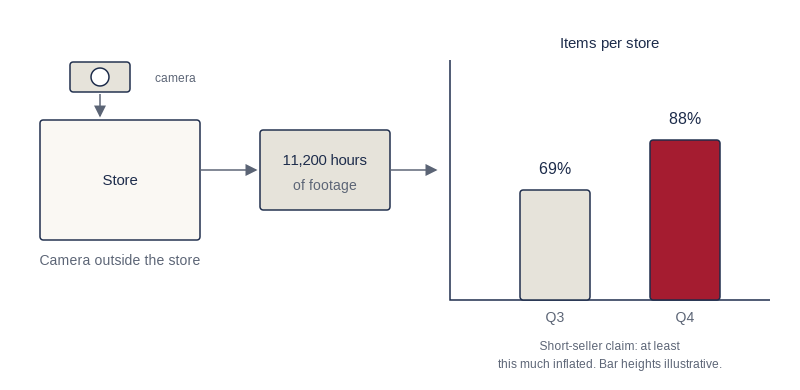
Muddy Waters ke 89-page short report ne claim kiya ki per-store items sold teesri quarter me kam se kam 69 percent aur chauthi me 88 percent inflated the, 11,200 ghante ki video footage ke aadhar par. Luckin ne pehle deny kiya (3 Feb 2020).[9] January 2020 me share placement aur convertible bond se total $821 million jutaye gaye.[9] April 2020 me stock 80 percent se zyada gira.[9] Chairman ke Goldman Sachs margin loan ($518 million) ka default hua.[9]
| Date | Event |
|---|---|
| Oct 2018 | 1,300 stores |
| May 2019 | Nasdaq listing; $17 par price, pehle din $25.96 |
| 31 Jan 2020 | Muddy Waters report |
| 2 Apr 2020 | Fabrication admit |
| 8 Apr 2020 | Trading halt |
| 29 Jun 2020 | Nasdaq se delisting |
| 16 Dec 2020 | SEC $180 million settlement |
| Feb 2021 | Chapter 15 |
Outcomes. September 2020 me China ke regulators ne Luckin aur linked firms par combined $8.98 million ka fine lagaya. SEC ne 16 December 2020 ko $180 million me case settle kiya. US class action 30 September 2021 ko $187.5 million me settle hui.[9] Source ke mutabik aaj Luckin 36,000 se zyada stores ke saath China ki sabse badi coffee chain batayi jati hai.[9]
Critical discussion. Audit me occurrence aur cut-off assertions ka matlab hai: sales sach me hui aur sahi period me hui. Disaggregated analytics (store, ghanta, product) aur operational data ka financial data se match karna fraud pakadne ke tareeke hain; iska demonstration Chapter 18 me hai. Short-seller report ko risk signal samjhein, par verify karein, kyunki short seller ka apna financial interest hota hai.
16.6.2 Valeant and Philidor (Canada/USA, 2015)
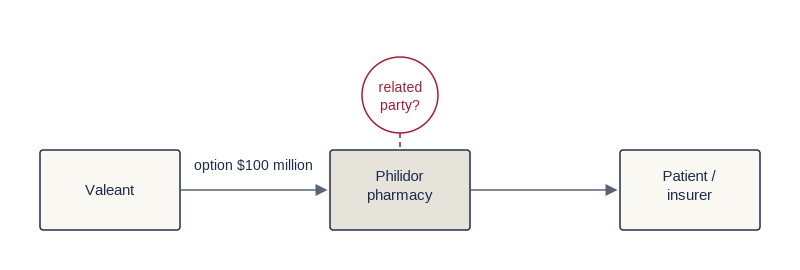
Philidor Rx Services ek pharmacy network tha jisse Valeant ki dawaiyaan bikti thi. Philidor 2 January 2013 ko bana; May 2014 me California non-resident pharmacy permit use deny hua; late 2014 me Valeant ne usse kharidne ke option ke liye $100 million diye; 30 October 2015 ko Valeant ne Philidor se ties kaat liye.[12] Valeant ke employees Philidor me alag email names ke saath kaam karte the; ek udaharan me ek Valeant manager "Peter Parker" naam se email use karta tha.[12]
Citron Research ke Andrew Left ne 21 October 2015 ko claim kiya ki Valeant ne Philidor aur affiliates ko false sales record ki. Valeant ne is claim ko "erroneous" bataya.[13] Source ke mutabik Valeant ne 2015 me apni brand-name dawaiyon ke prices 66 percent badhaye, jo closest peer se paanch guna zyada tha; Nitropress par 212 percent aur Isuprel par 525 percent.[13]
| Date | Event |
|---|---|
| 2 Jan 2013 | Philidor Rx Services founded |
| May 2014 | California permit deny |
| Late 2014 | $100 million option payment |
| 1 Apr 2015 | Valeant ne Salix $14.5 billion me kharida |
| 21 Oct 2015 | Citron claim |
| 30 Oct 2015 | Valeant ne Philidor se ties cut kiye |
| 25 Apr 2016 | Joseph Papa ne Pearson ki jagah li |
| 16 Dec 2019 | $1.21 billion shareholder class action settlement |
| 31 Jul 2020 | SEC: Bausch Health par $45 million penalty |
Tathya Philidor aur Bausch Health pages se hain.[12][13]
Regulatory outcome. SEC ne July 2020 me bataya ki Bausch Health ne $45 million penalty par settle kiya; Pearson par $250,000 civil penalty lagi aur unhone Valeant ko $450,000 reimburse kiye; Schiller par $100,000 aur Carro par $75,000.[13] Reuters ke mutabik company ne regulator ke findings admit ya deny nahi kiye.[14]
Critical discussion. Allegation aur finding me fark hai. Citron ka claim allegation tha; SEC settlement regulator ka settled charge tha, jisme company ne admit ya deny nahi kiya. Audit ke sawaal teen hain: option se $100 million ke baad kya Philidor Valeant ke control me tha (consolidation), revenue tab hi recognise ho jab control customer ko transfer ho (cut-off), aur disclosures misleading to nahi (SEC ne misleading disclosures par bhi penalty lagayi). Jahan seller aur buyer ki line dhundhli ho, wahan auditor poochhe: yeh party kaun hai, hamara kya rishta hai, paisa kahan se aaya.
16.7 Case study: Satyam Computer Services (India, 2009)
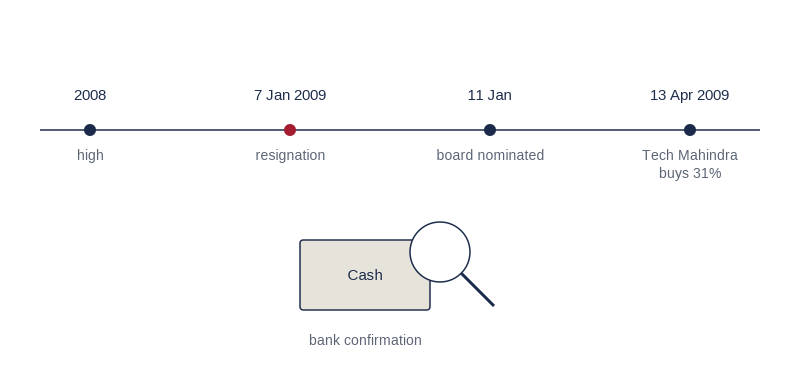
What happened. Satyam Hyderabad ki badi IT company thi. 7 January 2009 ko chairman B. Ramalinga Raju ne resign karke maana ki accounts manipulate kiye gaye the; figure Rs 7,000 crore bataya gaya.[4] Accounts me aise profit aur bank cash dikhaye gaye jo the hi nahi.[4]
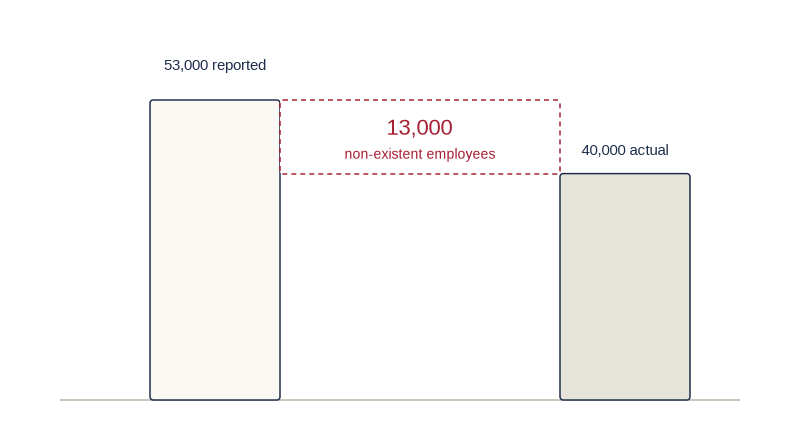
Ghost employees. CID ne court me kaha ki asli employees 40,000 the, 53,000 nahi. Aarop yeh tha ki 13,000 non-existent employees ke naam par har mahine Rs 200 million (Rs 20 crore) nikale gaye.[4]
Market and government response. 9 January 2009 ko share Rs 6.30 par aa gaya, jo March 1998 ke baad sabse neecha tha; 2008 ka high Rs 544 tha.[4] Company Law Board ne 10 January 2009 ko board hataya aur 10 nominal directors appoint kiye; Deepak Parekh, Kiran Karnik aur C Achuthan nominate hue.[4] Ek source section nominations ki tithi 11 January 2009 deta hai, doosra 10 January; yahan dono tithiyan source ke mutabik batayi gayi hain. CFO Srinivas ko CID ne pakda. 14 January 2009 ko Price Waterhouse ne kaha ki uske audit reports "inaccurate and unreliable" ho sakte hain. 13 April 2009 ko public auction se Tech Mahindra ne Satyam ka 31 percent stake kharida.[4]
Audit failure and regulatory outcome. Price Waterhouse auditor tha. SEC (US) ne Price Waterhouse India par $6 million ka fine lagaya. SEBI ne 2018 me Price Waterhouse ko listed companies ke audit se 2 saal ke liye bar kiya aur Rs 13 crore se zyada wrongful gains disgorge karne ko kaha.[4] Source ke mutabik SEBI ne firm ko complicit bataya aur auditing standards follow na hone ki baat kahi.[4]
Conviction. 9 April 2015 ko Hyderabad ki special CBI court ne Raju, unke bhai Rama Raju aur 8 anya, kul 10 aropiyon ko doshi paaya aur har ek ko 7 saal ki rigorous imprisonment di; Raju aur Rama Raju par Rs 5.5 crore ka fine laga.[5][6] Wikipedia ek jagah "10 April 2015" aur "11 members" likhta hai, par usi page ka doosra hissa 9 April aur 10 aropiyon ki baat karta hai. Yahan 9 April 2015 aur 10 aropi liye gaye hain, jo livelaw aur AP ke reports se milte hain.[5][6]
| Date | Event |
|---|---|
| 7 Jan 2009 | Raju ka confession; Rs 7,000 crore |
| 9 Jan 2009 | Share Rs 6.30 (2008 high Rs 544) |
| 10 Jan 2009 | CLB ne board hataya; CFO Srinivas ko CID ne pakda |
| 14 Jan 2009 | PW: audit reports "inaccurate and unreliable" ho sakte hain |
| 13 Apr 2009 | Tech Mahindra ne 31 percent kharida |
| 9 Apr 2015 | Raju aur 9 others ko 7 saal ki saza |
Lessons. Pehla, bank confirmation (SA 505): cash ka saboot seedha bank se, auditor ke control me.[19] Doosra, payroll aur headcount ko HR, PF aur tax records se cross-check karna. Teesra, cash vs interest: jab bahut cash dikhe par interest income uske hisab se na ho, to analytical procedure (SA 520) ko red flag dena chahiye. Chautha, ek hi vyakti ke paas bahut zyada control. Payroll vouching me har employee ka ID, attendance, bank account aur PF record, aur physical verification shamil hai (Chapter 7). Source ke mutabik Satyam ke baad India me corporate governance aur audit regulation sakht hue, jaise Companies Act 2013 ka Section 143(12) fraud reporting ke liye, Section 447 fraud ki saza ke liye, aur NFRA; vistaar Chapter 17 me hai.
Exam trap: Satyam ki audit failure me sirf "PwC" likhna kaafi nahi. SEC ne US me fine lagaya aur SEBI ne India me bar kiya; dono alag regulators hain.
16.8 Comparative analysis and red flags
16.8.1 The ten cases side by side
| # | Company | Country | Year | Detected by | Main technique |
|---|---|---|---|---|---|
| 1 | Enron | USA | 2001 | Short seller, journalist, internal letter | SPEs, mark-to-market |
| 2 | WorldCom | USA | 2002 | Internal audit | Expense capitalised as asset |
| 3 | Satyam | India | 2009 | Chairman's confession | Fake cash, fake employees |
| 4 | Wirecard | Germany | 2020 | FT, short sellers, auditor | Missing cash (€1.9 billion) |
| 5 | Luckin | China | 2020 | Muddy Waters, then internal probe | Fabricated sales |
| 6 | Valeant | Canada/USA | 2015 | Short seller (Citron) | Channel and related-party concerns |
| 7 | Toshiba | Japan | 2015 | Internal investigation | Profit inflation under pressure |
| 8 | Carillion | UK | 2018 | Market, liquidation | Hidden leverage, weak cash |
| 9 | Parmalat | Italy | 2003 | CFO, bank | Forged cash document |
| 10 | Olympus | Japan | 2011 | Whistleblower CEO | Tobashi, large fees |
Is table ke tathya upar ke sections me cited hain. Ek tathya jo table se dikhta hai: das me se bahut kam cases me external auditor pehla detector tha. Isse yeh nahi nikalta ki auditor ka kaam bekar hai; yeh batata hai ki management-driven fraud me auditor ke procedures ko un jagahon par jaana padta hai jahan management ka haath nahi pahunchta, jaise bank se seedha confirmation.
16.8.2 Red flags checklist
- Profit badhta hai par operating cash flow nahi.
- Receivables bahut tezi se badhte hain.
- Ek hi vyakti (CEO ya CFO) ke paas sabka control.
- Related party transactions jinka business reason samajh nahi aata.
- Bank confirmation ya third-party evidence me deri ya inkaar.
- Auditor ko access nahi milta ya jaldi deadline di jati hai.
- Audit fee se bahut zyada non-audit fee.
- Complex structure aur bahut saari subsidiaries.
- Whistleblower ya media ke aarop.
- Bonus aur targets ka bahut pressure.
- Auditor change ya resignation bina saaf karan ke (Olympus).
- Asaamanya roop se bade advisory ya success fees (Olympus).
16.8.3 Red flag to procedure map
| Suspicion | Primary procedure | Case |
|---|---|---|
| Cash | Direct bank confirmation under auditor control | Satyam, Parmalat, Wirecard |
| Expense capitalised | Capex vouching, journal entry testing | WorldCom |
| Related party | Control and consolidation test | Valeant, Enron |
| Auditor change | Communication with predecessor auditor | Olympus |
| Revenue | Disaggregated analytics, cut-off test | Luckin |
| Whistleblower | Audit committee, entry sample testing | WorldCom, Wirecard |
16.9 Worked problems
Neeche ke numbers source se liye gaye hain; jahan figure illustrative hai, wahan likha gaya hai.
Problem 1 (WorldCom: size of the adjustment). Q1 2002 me reported profit $130 million tha. Entries hata dene par $395 million ka loss aata. Adjustment kitna hai?
Solution. Adjustment = reported profit minus restated result = $130 million minus (minus $395 million) = $525 million. Yani entries ne profit ko $525 million se upar uthaya. Is figure ka source ke total ($3.8 billion, 49 entries) se seedha sambandh nahi hai, kyunki $3.8 billion kai quarters ka total hai.
Problem 2 (WorldCom: correcting journal entry). Maan lijiye ek line cost ke 100 units ko galti se asset me daala gaya (illustrative figure). Galat entry aur correction likhiye.
Solution.
| Entry | Debit | Credit |
|---|---|---|
| Galat entry | Prepaid capacity (asset) 100 | Line cost expense 100 |
| Correcting entry | Line cost expense 100 | Prepaid capacity (asset) 100 |
Correction se profit 100 units ghatta hai aur asset 100 units ghatta hai.
Problem 3 (Satyam: ghost employees). CID ke mutabik reported employees 53,000 aur asli 40,000 the. Non-existent employees kitne percent hain reported headcount ke, aur Rs 200 million har mahine ka matlab prati ghost employee kitna hai?
Solution. Non-existent = 53,000 minus 40,000 = 13,000. Reported headcount ka percent = 13,000 / 53,000 = lagbhag 24.5 percent. Prati ghost employee har mahine = Rs 200,000,000 / 13,000 = lagbhag Rs 15,385. Saal bhar ka outflow = Rs 20 crore x 12 = Rs 240 crore (alleged figure ke aadhar par).
Problem 4 (Enron: Chewco/JEDI correction). Maan lijiye restate se pehle ek hypothetical ratio me reported debt 1,000 units tha (illustrative). Source ke mutabik debt $628 million badha aur earnings $405 million kam hui. Real figure ke saath kya analysis kar sakte hain?
Solution. Illustrative figure ke bina bhi dono adjustments ka asar saaf hai: debt me $628 million ki vriddhi aur 1997 se mid-2001 ki cumulative earnings me $405 million ki kami. Dono ek saath yeh batate hain ki reported leverage kam aur reported profit zyada tha. Auditor ke liye sabak yeh hai ki off-balance-sheet entity ke liye consolidation ka test control aur risks par ho, sirf legal ownership par nahi.
Problem 5 (Luckin: implied exchange rate). Fabricated sales RMB 2.2 billion thi, jo US$310 million ke barabar bataayi gayi. Implied rate kya hai?
Solution. RMB 2,200 million / US$310 million = lagbhag 7.10 RMB per US$. Yeh ek derived number hai, source ka tathya nahi.
Problem 6 (Parmalat: scale of understatement). Debt auditors ke hisab se €14.3 billion nikla, jo source ke mutabik originally bataye gaye se lagbhag aath guna tha. Originally bataya gaya figure lagbhag kitna hoga?
Solution. 14.3 / 8 = lagbhag €1.8 billion. Yeh ek approximation hai, kyunki source "almost eight times" likhta hai. Late December 2003 me admitted €8 billion ka hole is figure se alag hai.
16.10 Chapter summary
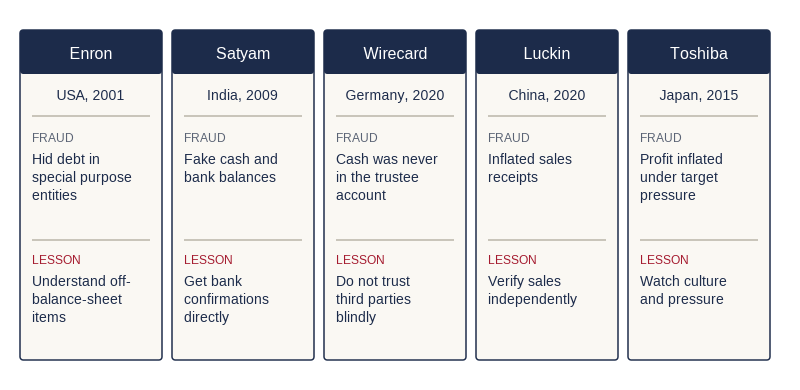
Bade corporate frauds me teen pattern milte hain: fake ya inflated numbers, chhupa hua karza, aur kamzor audit evidence. Enron ne SPEs me debt chhupaya aur mark-to-market se profit dikhaya; Arthur Andersen ka license 2002 me gaya aur Sarbanes-Oxley aaya. WorldCom me line costs ko asset banakar profit badhaya gaya aur $3.8 billion ki 49 entries internal audit ne pakdi. Satyam me Rs 7,000 crore ka manipulation, 13,000 kalpanik employees ke aarop aur SEBI-SEC ki alag alag karyavahi hui. Wirecard me €1.9 billion "missing" the aur Parmalat me forged bank document €3.95 billion dikhata tha, jo dono cash confirmation ke sawaal uthate hain. Luckin me 2019 ki RMB 2.2 billion sales fabricate hui aur short-seller report ne operational data se contradict kiya. Toshiba, Olympus aur Carillion pressure, tobashi aur reverse factoring ke udaharan hain. Valeant ka case allegation aur finding ke antar ko samjhata hai. SA 240 fraud, SA 200 skepticism, SA 505 confirmation, SA 550 related parties, SA 520 analytical procedures, SA 540 estimates aur SA 600 group audit se jude hain. Fraud rokna management ki zimmedari hai; auditor reasonable assurance deta hai aur red flag dikhne par scope badhata hai.
16.11 Review questions
Short-answer questions
- Fraudulent financial reporting aur misappropriation of assets me fark likhiye.
- Professional skepticism ko define kijiye aur batayiye ki yeh "har cheez par shak" kyun nahi hai.
- Mark-to-market accounting ke Enron me kaunse risk the?
- Capitalisation of expenses se profit kaise badhta hai? WorldCom ka example dijiye.
- External confirmation ko auditor ke control me kyun hona chahiye? Parmalat ke sandarbh me samjhaiye.
- Tobashi kya hai aur Olympus me uska kaunsa red flag tha?
- Reverse factoring ko define kijiye aur batayiye ki yeh debt ke disclosure ko kaise prabhavit kar sakta hai.
- Allegation aur finding me fark Valeant ke example se samjhaiye.
- Satyam me SEC aur SEBI ki karyavahi ko alag kyun likhna chahiye?
- Management override of controls internal control ki limitation kyun hai? Ek case dijiye.
Answer pointers. (1) SA 240 ke do prakaar, section 16.2. (2) Questioning mind aur evidence ka critical assessment. (3) Future profit abhi dikhana, estimates par nirbhar. (4) Expense ko asset me daalna, problem 2. (5) Forgery aur collusion ka risk. (6) Loss ko doosri entities me udaana; bade success fees. (7) Supplier finance; trade payables ke roop me chhupa debt. (8) Citron ka claim allegation, SEC settlement regulator ka finding. (9) Alag regulators, alag desh. (10) Top level controls bypass kar sakta hai; Toshiba, Enron ya Satyam.
Multiple-choice questions
Q1. WorldCom me fraud sabse pehle kisne pakda? a) KPMG b) SEC c) Company ki internal audit unit d) Ek short seller
Answer: c. Internal audit team ne capital expenditure audit me prepaid capacity entries dhundhi, aur external auditor ne is area ko test nahi kiya tha.
Q2. WorldCom ki "prepaid capacity" entries ka asar kya tha? a) Tax kam hua b) Expense ko asset dikhakar profit badha c) Cash chhup gaya d) Dividend badha
Answer: b. Line costs expense accounts se asset accounts me gaye, jisse reported profit upar gaya.
Q3. Chewco aur JEDI ke correction se Enron ke earnings aur debt par kya asar hua? a) Earnings $628 million kam, debt $405 million zyada b) Koi asar nahi c) Dono kam hue d) Earnings $405 million kam, debt $628 million zyada
Answer: d. Source ke mutabik earnings 1997 se mid-2001 tak $405 million kam hui aur debt $628 million badha.
Q4. Arthur Andersen ki conviction ka antim parinaam kya tha? a) Supreme Court ne 2005 me reverse ki b) Upheld rahi c) Presidential pardon d) Retrial hua
Answer: a. Par firm 2002 me CPA licenses surrender kar chuki thi.
Q5. Satyam me CID ke aarop ke mutabik kitne employees non-existent the? a) 5,000 b) 13,000 c) 40,000 d) 53,000
Answer: b. 53,000 reported aur 40,000 asli the, antar 13,000.
Q6. Parmalat me Bank of America ne kis rakam ke document ko forgery bataya? a) €1.9 billion b) €14 billion c) €3.95 billion d) €300 million
Answer: c. Document Bonlat ke account me €3.95 billion dikhata tha.
Q7. Olympus me Gyrus acquisition par advisors ko kitna "success fee" mila? a) $687 million b) $6.87 million c) $68.7 million d) $6.87 billion
Answer: a. Axes America aur Axam ko, jabki Gyrus ka cost $2 billion tha.
Q8. Auditor badalne ke baad naya auditor sabse pehle kya kare? a) Purane auditor ko ignore kare b) Fees kam kare c) Management ke bataye reasons maan le d) Purane auditor se professional communication kare
Answer: d. Isse resignation ke asli karan samajhne me madad milti hai; Olympus/Gyrus pattern ek red flag tha.
Q9. Citron Research ka 21 October 2015 ka Valeant par claim kya tha? a) Cash missing hai b) Philidor aur affiliates ko false sales record hui c) Employees fake hain d) Tax evasion hui
Answer: b. Yeh allegation tha; Valeant ne ise "erroneous" bataya.
Q10. "Management override of controls" kis cheez ki limitation hai? a) Internal control b) Substantive tests c) Sampling d) Analytical procedures
Answer: a. Top level management controls ko bypass kar sakta hai; Enron, Toshiba aur Satyam me yeh dikha.
Notes and references
Access date for all web sources: 27 November 2026. Company figures Wikipedia aur news pages se hain, primary filings se nahi.
[1] Wikipedia, "Enron scandal", Wikipedia, 2026-11-27, https://en.wikipedia.org/wiki/Enron_scandal. Supports: $63.4 billion assets and largest US bankruptcy at the time; share fall from US$90.75 (August 2000) to under $1; $40 billion suit and $7.2 billion compensation; revenue growth from $13.3 billion in 1996; Raptor transfers over $1.2 billion and $1.2 billion equity decrease; Chewco/JEDI earnings $405 million down and debt $628 million up; $500 million swap gain against $1.1 billion portfolio decline; mark-to-market first for a non-financial company; Weil, Watkins and Fastow timeline items; Andersen guilty verdict overturned; Lay and Skilling outcomes; Sarbanes-Oxley penalties.
[2] Wikipedia, "Arthur Andersen", Wikipedia, 2026-11-27, https://en.wikipedia.org/wiki/Arthur_Andersen. Supports: 10 Jan 2002 announcement; 15 Jun 2002 conviction; 31 Aug 2002 license surrender; 31 May 2005 Supreme Court reversal; 28,000 employees in 2002 and about 200 by 2005.
[3] Wikipedia, "Sarbanes-Oxley Act", Wikipedia, 2026-11-27, https://en.wikipedia.org/wiki/Sarbanes%E2%80%93Oxley_Act. Supports: provision on obstructing an official proceeding enacted in reaction to Enron.
[4] Wikipedia, "Satyam scandal", Wikipedia, 2026-11-27, https://en.wikipedia.org/wiki/Satyam_scandal. Supports: Raju resignation 7 Jan 2009 and Rs 7,000 crore; fictitious profits and cash; 40,000 versus 53,000 employees and Rs 200 million monthly (alleged); share Rs 6.30 and 2008 high Rs 544; board nominations; CLB order; Tech Mahindra 31 percent on 13 Apr 2009; PwC $6 million SEC fine; SEBI 2018 two-year bar and Rs 13 crore disgorgement; 14 Jan 2009 PW statement.
[5] LiveLaw, "Satyam Scam: Ramalinga Raju and brother fined Rs 5.5 crore each, all 10 accused convicted with 7 years imprisonment and fine", LiveLaw, 2026-11-27 (accessed), https://www.livelaw.in/satyam-scam-ramalinga-raju-and-brother-fined-rs-5-5-crore-each-all-10-accused-convicted-with-7-years-imprisonment-and-fine. Supports: special CBI court, 9 April 2015, Raju and nine others, 7 years RI.
[6] Associated Press, report on the Satyam sentencing, AP News, 2026-11-27 (accessed), https://apnews.com/general-news-3aa5fdd7765546bbb86912da293c1125. Supports: founder and nine others sentenced to seven years each on Thursday 9 April 2015.
[7] Wikipedia, "Wirecard scandal", Wikipedia, 2026-11-27, https://en.wikipedia.org/wiki/Wirecard_scandal. Supports: 25 June 2020 insolvency; €1.9 billion missing; Braun arrested; BaFin and EY questions; half of revenue and almost all profit via three opaque processors in 2019; €340 million 2015 acquisition with at least €175 million not transferred; Marsalek fugitive.
[8] Wikipedia, "Wirecard", Wikipedia, 2026-11-27, https://en.wikipedia.org/wiki/Wirecard. Supports: FT Alphaville April 2015; Zatarra February 2016; FT 30 Jan 2019; BaFin short-selling ban 18 Feb to 18 Apr 2019; cases dropped March 2020; Braun CEO 2002; KPMG 28 Apr 2020 and 26 percent fall; 72 percent fall; Braun arrest 22 June; trial 8 Dec 2022; EY trustee statement; two Philippine banks; Pav Gill on 20 May 2021.
[9] Wikipedia, "Luckin Coffee", Wikipedia, 2026-11-27, https://en.wikipedia.org/wiki/Luckin_Coffee. Supports: COO Jian Liu and RMB 2.2 billion (US$310 million); Muddy Waters 89 pages, 69 percent and 88 percent, 11,200 hours; denial 3 Feb 2020; $821 million raised January 2020; 80 percent fall in April 2020; $518 million margin loan default; $8.98 million China fine; $180 million SEC settlement; $187.5 million class action; 1,300 stores in October 2018; Nasdaq IPO at $17 and $25.96; halt, delisting and Chapter 15 dates; more than 36,000 stores.
[10] Wikipedia, "Toshiba", Wikipedia, 2026-11-27, https://en.wikipedia.org/wiki/Toshiba. Supports: May 2015 investigation; Tanaka resignation 21 July 2015 and eight other officials; $1.2 billion inflation over seven years; Westinghouse bankruptcy 2017; 140-year history quote; index removal; Tsunakawa May 2016.
[11] Wikipedia, "WorldCom scandal", Wikipedia, 2026-11-27, https://en.wikipedia.org/wiki/WorldCom_scandal. Supports: night work and T accounts; timeline items from Emigh to 2005 conviction; 49 entries, $3.8 billion; Q1 2002 $130 million profit versus $395 million loss; "SS entry" labels; Vinson and Myers; Andersen not testing capex; KPMG taking the account.
[12] Wikipedia, "Philidor Rx Services", Wikipedia, 2026-11-27, https://en.wikipedia.org/wiki/Philidor_Rx_Services. Supports: founded 2 Jan 2013; California permit denied May 2014; $100 million option; ties cut 30 Oct 2015; Valeant employees placed at Philidor with fictitious email names.
[13] Wikipedia, "Bausch Health", Wikipedia, 2026-11-27, https://en.wikipedia.org/wiki/Bausch_Health. Supports: Citron claim 21 Oct 2015; Salix $14.5 billion April 2015; 66 percent price rise, Nitropress 212 percent, Isuprel 525 percent; Papa named 25 Apr 2016; $1.21 billion settlement 16 Dec 2019; SEC $45 million penalty and individual penalties.
[14] Reuters, "Bausch Health, three former executives agree to penalties to resolve U.S. SEC charges", Reuters, 2026-11-27 (accessed), https://www.reuters.com/article/business/bausch-health-three-former-executives-agree-to-penalties-to-resolve-u-s-sec-char-idUSKCN24W317/. Supports: company did not admit or deny the regulator's findings.
[15] Wikipedia, "Carillion", Wikipedia, 2026-11-27, https://en.wikipedia.org/wiki/Carillion. Supports: second largest UK construction company; 43,000 employees in 2016; liquidation 15 Jan 2018; parliamentary report; FCA fines over £600,000 and FRC over £280,000; Big Four fees £72 million; timeline items; UBS analyst statement; pension deficit about £580 million; Msheireb £200 million claim disputed; fallout figures (£1 billion suppliers, 27,000 pension members, 2,787 redundancies, 13,945 jobs safeguarded, Barclays £127 million).
[16] IFRS Foundation, "IASB increases transparency of companies' supplier finance arrangements", IFRS.org, 25 May 2023, https://www.ifrs.org/news-and-events/news/2023/05/iasb-increases-transparency-of-companies-supplier-finance/. Supports: IASB disclosure requirements for supplier finance arrangements (IAS 7 and IFRS 7 amendments).
[17] Wikipedia, "Parmalat", Wikipedia, 2026-11-27, https://en.wikipedia.org/wiki/Parmalat. Supports: founded 1961 by Tanzi aged 22; over 30,000 employees in 30 countries; €3.95 billion forgery; timeline items; CFO Ferraris; €14.3 billion debt; credit-linked notes; Deloitte $149 million, Bank of America $100 million, Grant Thornton $4.4 million; about $700 million recovered; 10-year sentence (BBC, December 2008).
[18] Wikipedia, "Olympus scandal", Wikipedia, 2026-11-27, https://en.wikipedia.org/wiki/Olympus_scandal. Supports: Woodford ousted 14 October 2011 and not allowed to speak or vote; $687 million success fee to Axes America and Axam; Gyrus $2 billion; ¥73.5 billion; timeline items; ¥117.7 billion and ¥481 billion figures; KPMG and EY and Gyrus auditors' letter; panel clearing KPMG and EY; Woodford £10 million settlement.
[19] Institute of Chartered Accountants of India, Standards on Auditing (SA 200, 240, 315, 500, 505, 520, 540, 550, 600), ICAI. Standard numbers and short descriptions come from the source chapter author's knowledge and were not fetched. Verify against the current ICAI SA list before publication.