Forensic Audit and Fraud Detection
Abstract
Yeh chapter forensic audit ko normal audit se alag karke samjhata hai aur fraud detection ke tools ko ek jagah laata hai. Pehle fraud triangle aur red flags ka framework diya gaya hai, phir data analytics ke tareeke: ratio analysis, Beneish M-score aur Benford's law. Iske baad transaction-level tests aate hain: duplicate, gap, three-way match, ghost employee, lapping aur kiting. Legal hissa Companies Act 2013 ke Section 143(12) aur Section 447 ko cover karta hai. Chapter me chhe worked exercises hain, jinka data practice ke liye banaya gaya (kalpanik) hai. Real company figures sirf sourced notes ke saath aaye hain.
Learning objectives
Is chapter ke baad reader:
- define kar sakega ki forensic audit kya hai aur chain of custody kyun zaroori hai;
- distinguish kar sakega fraud triangle ke teen elements aur auditor ki bhumika ko har element ke liye;
- compute kar sakega Benford chi-square, DSO, aur Beneish M-score ke saath poora step-by-step hisaab;
- evaluate kar sakega ki kaunsa result flag hai aur kaunsa proof, aur kyun in dono me fark hai;
- apply kar sakega duplicate, gap, three-way match aur ghost employee tests ek diye gaye data par;
- explain kar sakega Companies Act 2013 ke Section 143(12) aur Section 447 ke tahat auditor aur fraudster ke liye kya prabandh hai.
17.1 Introduction and research question
Chapter 16 me dekha gaya ki bade frauds me kya chhupa tha. Is chapter ka prashn yeh hai: ek auditor ya investigator ke paas fraud pakadne ke liye kaunse tools aur kaunsi legal zimmedari hai, aur har tool ki seema kya hai?
Forensic audit ek aisi jaanch hai jo poochti hai: kya fraud hua, kisne kiya, kitna hua, aur court me ise kaise sabit kiya jaye. Normal audit alag prashn poochta hai: kya financial statements me material misstatement hai. Isliye forensic audit me accounting, investigation aur law teeno milte hain. Saboot is tarah rakhne padte hain ki court me tikein. Isi vyavastha ko chain of custody kehte hain: saboot kisne kab liya, kahan rakha aur kisko diya, sab likhit record me ho.
17.2 Why frauds occur: the fraud triangle
17.2.1 Concept
Fraud triangle ke teen elements hain: pressure (dabav), opportunity (mauka) aur rationalization (khud ko sahi batana). Is framework ka shrey Donald Cressey ke kaam ko diya jata hai. Cressey American criminologist the aur unhone embezzlement par Other People's Money likhi.[1] Source ke mutabik Cressey ne khud apne published kaam me "fraud triangle" shabd use nahi kiya; teen elements unke research se nikle.[1][2] Exam me "Cressey" likhna theek hai, par yeh shabd baad ka hai.
| Element | Meaning | Examples | Auditor ki response |
|---|---|---|---|
| Pressure | Paise ya target ka tension | Karza, bonus target, lifestyle, gambling | Management targets aur incentive structure padhna |
| Opportunity | Control ki kamzori | Ek hi vyakti cash aur record dono sambhale; koi review nahi | Internal control testing, segregation of duties |
| Rationalization | Khud ko sahi batane ki soch | "Salary kam hai", "baad me wapas kar dunga" | Attitude, tone at the top, auditor se disputes |
Auditor sabse zyada opportunity ko control karta hai, kyunki internal control uska hi upay hai. Pressure aur rationalization ko seedha dekhna mushkil hai, par lifestyle, targets aur attitude ke roop me sanket milte hain.
Chapter 16 ke source me ek aur concept ka naam aaya: fraud diamond, jo triangle me "capability" jodta hai.[12] Isi tarah fraud ke teen bade prakaar ACFE ke occupational fraud classification se liye gaye hain: asset misappropriation, corruption aur fraudulent financial statements.[12] Yeh dono attributions source chapter me bina web link ke the; verify karke hi prakashit karein.
17.2.2 Illustrative example
Ek chhoti firm ka munim cash bhi sambhalta hai, cash book bhi likhta hai aur bank me jama bhi karta hai. Maan lijiye us par ghar ka financial dabav hai (pressure), koi check karne wala nahi hai (opportunity), aur wo sochta hai ki paisa baad me wapas kar dega (rationalization). Yeh ek kalpanik udaharan hai. Fix: ek vyakti cash rakhe, doosra record likhe, aur teesra bank reconciliation kare. Isko segregation of duties kehte hain.
Critical discussion
Triangle ki limit yeh hai ki yeh embezzlement ke research se nikla hai, isliye chhote frauds ko samjhane me madad karta hai. Bade corporate frauds me pressure aksar market ke targets ka hota hai. WorldCom me audit committee aur KPMG ke nishkarsh ke mutabik amounts "solely to meet Wall Street targets" transfer hue the.[6] Dusri limit: rationalization ko auditor seedha maap nahi sakta. Isliye exam me likhna chahiye ki auditor opportunity ko control kar sakta hai, baaki do elements ko sirf observe kar sakta hai.
17.3 Red flags
Red flag ek aisa sanket hai jo fraud ka saboot nahi, balki jaanch ka karan hota hai.
| Category | Red flags |
|---|---|
| Accounting | Round figure entries; weekend ya holiday ke journal entries; month-end ya year-end par badi manual entries; invoice numbers me gap ya duplicate; profit up par cash flow flat; receivables ka tezi se badhna (DSO badhna); ek hi vendor ko approval limit ke neeche baar-baar chhoti amounts |
| Behaviour | Employee kabhi chhutti nahi leta; lifestyle income se zyada; auditor ko documents dene me deri; ek hi vyakti sab approve karta hai |
| Vendor | Vendor ka address employee ke address se match; PO box ya vendor jiska GST/PAN verify nahi hota; ek hi bank account kai vendors ke naam |
Red flag ke baad agla kadam hai scope badhana: zyada evidence, independent source se confirmation aur documentation.
17.4 Statistical and analytical tools
17.4.1 Ratio and trend analysis
Pichle saalon se tulna sabse seedha tool hai. Agar revenue badhe par receivables usse bahut zyada badhein, to prashn banta hai. Days Sales Outstanding (DSO) = Receivables / Sales x 365. Fraud aur business ki kamzori, dono ek jaise symptom dikha sakte hain, isliye ratio sirf sawal deta hai, jawab nahi. Worked problem 3 isko poore hisaab ke saath dikhata hai.
17.4.2 Beneish M-score
Beneish M-score 8 variables se earnings manipulation ki probability aankta hai. Model: M = −4.84 + 0.92 DSRI + 0.528 GMI + 0.404 AQI + 0.892 SGI + 0.115 DEPI − 0.172 SGAI + 4.679 TATA − 0.327 LVGI. Threshold −1.78 hai: usse neeche score kam sambhavna dikhata hai (udaharan −2.50), usse upar zyada sambhavna.[4] Model probabilistic hai, 100 percent accurate nahi, aur financial institutions par lagu nahi hota.[4] Variables ke naam: DSRI (Days Sales in Receivables Index), GMI (gross margin index), AQI (asset quality index), SGI (sales growth index), DEPI (depreciation index), SGAI (SG&A index), LVGI (leverage index), TATA (total accruals to total assets).
DSRI = (Receivables_t / Sales_t) / (Receivables_t-1 / Sales_t-1). Source ke mutabik Cornell ke students ne 1998 me M-score se Enron ko earnings manipulator pehchana tha, jabki Wall Street analysts tab bhi "buy" ki salah de rahe the.[4] Chapter 16 ke source ke mutabik Enron me SPE consolidate karne par 1997 se mid-2001 tak reported earnings $405 million kam hui aur karza $628 million badha.[5] Isse dikhta hai ki hidden karza aur inflated profit saath chalte hain, aur ratio-based screening ek early warning ho sakti hai, par akeli kaafi nahi.
17.4.3 Benford's law
Benford's law kehta hai ki bahut se asli datasets me pehla digit 1 lagbhag 30 percent baar aata hai aur 9 lagbhag 5 percent se kam; agar sab digits barabar hote to har digit 11.1 percent hota.[3] Formula: P(d) = log10(1 + 1/d). Yeh tab sabse theek lagta hai jab data kai orders of magnitude me phailay.[3] Naam Frank Benford (1938) ka hai, par Simon Newcomb ne 1881 me pehle yeh baat kahi thi.[3]
| First digit | 1 | 2 | 3 | 4 | 5 | 6 | 7 | 8 | 9 |
|---|---|---|---|---|---|---|---|---|---|
| Expected % | 30.1 | 17.6 | 12.5 | 9.7 | 7.9 | 6.7 | 5.8 | 5.1 | 4.6 |
Table ke figures Wikipedia ke Benford's law page se hain.[3]
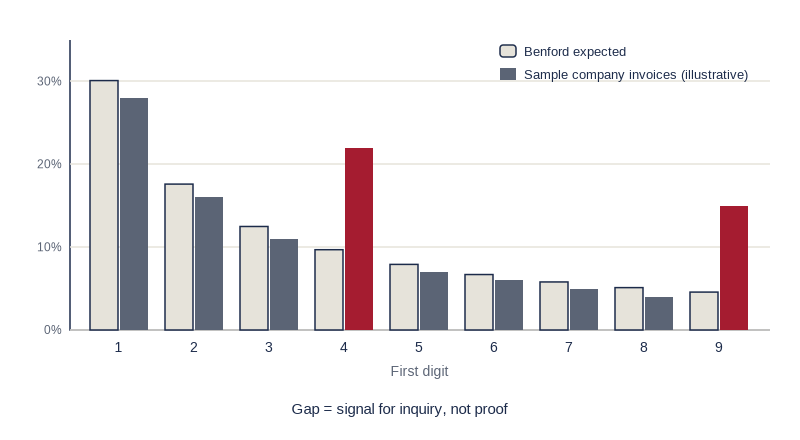
Limits. Wikipedia ke mutabik tightly bounded data par law galat alarm de sakta hai; election returns me iska misapplication isi karan hua.[3] Benford ka second-digit test election forensics me bhi use hua hai.[3] Accounting me pehle digit se shuru karna theek hai. Benford sirf flag deta hai.
17.5 Transaction-level tests
17.5.1 Duplicate, gap and three-way match
- Duplicate test: same vendor, same amount aur same date ke payments.
- Gap test: cheque ya invoice numbers me missing sequence.
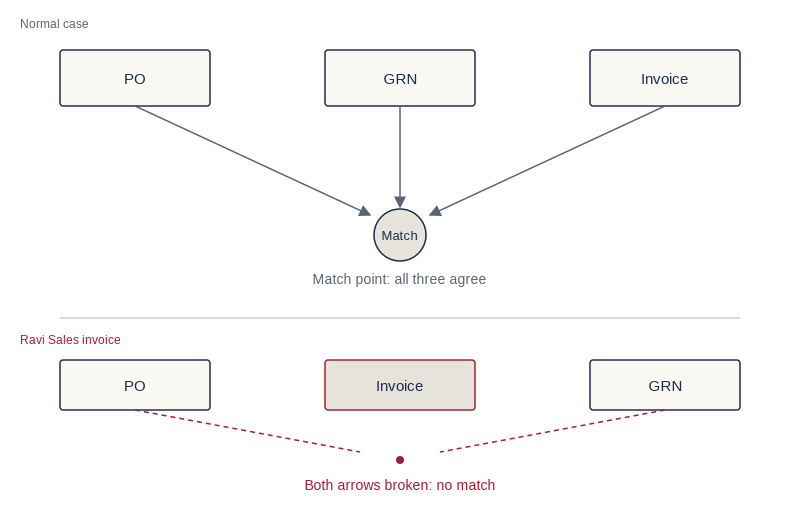
- Three-way match: Purchase Order (PO), Goods Received Note (GRN) aur Invoice teeno match hone chahiye. Agar nahi, to payment rokni chahiye aur karan samjhna chahiye.
17.5.2 Ghost employee test
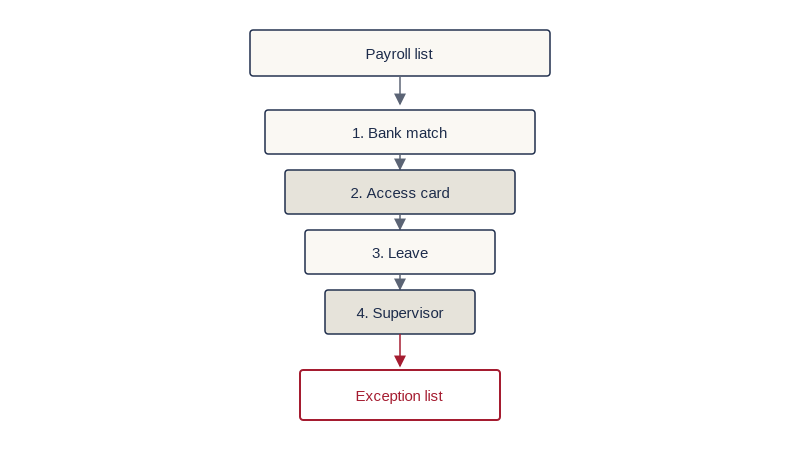
Payroll list ko HR, attendance, PF aur bank details se match karo. Chapter 16 me Satyam ke case me CID ne kaha ki asli employees 40,000 the, reported 53,000, aur 13,000 non-existent employees ke naam par har mahine Rs 200 million nikalne ka aarop tha.[7] Is test me sabse achha evidence independent hota hai: access card, bank aur direct payment verification, HR ke apne register se bahar.
17.5.3 Surprise cash count and bank confirmation
Cash ki surprise gintee aur seedhe bank se confirmation (SA 505) cash fraud ke liye base procedures hain. Dono ki limit hai: surprise count ek snapshot hai, aur confirmation collusion me fail ho sakta hai.[11]
17.5.4 Lapping and kiting
Lapping me ek customer ka paisa rakh liya jata hai aur agle customer ke paise se uska account chhupaya jata hai, jisse chain chalti rehti hai. Pakadne ka tareeka: customer ledger me payment dates aur bank deposit dates ka match, aur customers ko balance confirmation (SA 505).
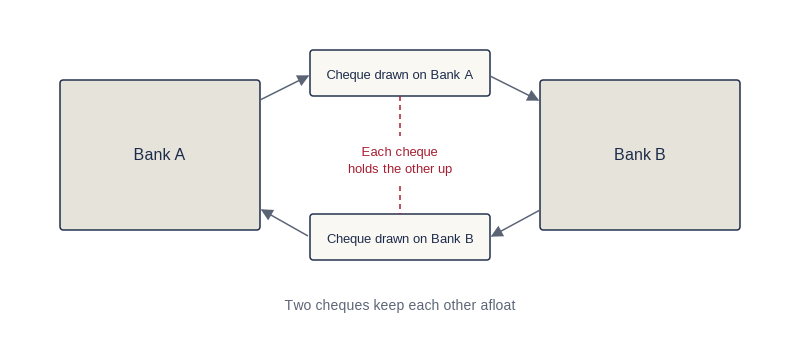
Check kiting me ek bank se cheque doosre bank ke cheque se cover kiya jata hai, jabki dono me paise nahi hote; beech ka float (clearing ka time) hi "paisa" ban jata hai.[8] Term 1920s se prachlit hai aur "flying a kite" hawa ke bharose chalne ki baat se aaya.[8] Audit test: bank reconciliation me aise cheque deposits jo agle din clear nahi hue, year-end ke aas paas do accounts ke beech bade transfers, aur "cash in transit" ka asaamanya roop se bada hona.
Critical discussion
Har tool ki ek seema hai. M-score aur Benford sirf signal dete hain. Three-way match collusion me fail hota hai, jaise vendor aur receiving staff milkar kaam karein. Bank confirmation bhi collusion me fail ho sakta hai (Chapter 16). Isliye forensic work me kai tools ko jodkar dekha jata hai aur har exception ka karan poochha jata hai.
| Tool | What it catches | Limit |
|---|---|---|
| M-score | Earnings manipulation | Sirf signal; financial institutions par lagu nahi |
| Benford | Banaye hue numbers | Bounded data par fail |
| Three-way match | Fake purchases | Collusion me fail |
| Surprise count | Cash chori | Snapshot hai |
| Bank confirmation | Fake cash | Collusion me fail |
17.6 Legal framework: fraud and the auditor in India
Neeche ke prabandh Companies (Audit and Auditors) Rules, 2014 ke Rule 13 aur Section 447 ke text par aadharit hain, jaisa source chapter me verify kiya gaya.[9][10]
17.6.1 Section 143(12) and Rule 13
Section 143(12), Companies Act 2013: agar auditor ko lage ki company ke against officers ya employees ne fraud kiya hai ya kar rahe hain, to wo ise report karta hai. Rule 13 ke mutabik:
| Fraud amount | What the auditor does |
|---|---|
| Rs 1 crore ya usse zyada | 2 din ke andar Board ya Audit Committee ko batata hai (45 din me reply maangta hai); phir 15 din ke andar Central Government ko Form ADT-4 me electronically report bhejta hai |
| Rs 1 crore se kam | 2 din ke andar Audit Committee ya Board ko report karta hai; company Board's Report me uski details batati hai |
Table ke prabandh Rule 13 ke text par hain.[9]
17.6.2 Section 447
Section 447 fraud ki saza batati hai. Kam se kam 6 mahine aur zyada se zyada 10 saal ki jail, aur fine jo fraud ki amount se kam nahi, par amount ka 3 guna tak ho sakta hai. Agar fraud public interest se jura ho to jail kam se kam 3 saal. Chhoti fraud (Rs 10 lakh ya company turnover ka 1 percent, in dono me jo kam ho, usse kam, aur public interest nahi) me 5 saal tak jail ya Rs 50 lakh tak fine ya dono.[10]
17.6.3 Standards on Auditing
SA 240 fraud me auditor ki zimmedari batata hai. SA 315 (Revised) risk identification, SA 330 assessed risks par response, SA 505 external confirmations, SA 550 related parties, SA 580 written representations, aur SA 250 laws aur regulations ke compliance se judta hai.[11] Source ke mutabik SA 200, 240 aur 250 ke titles ICAI list se confirm hue; baaki numbers standard ICAI numbering hain.
17.7 Forensic investigation process and prevention
17.7.1 Steps
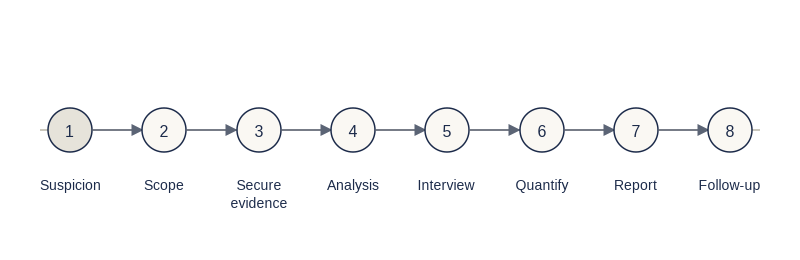
- Suspicion ya allegation milna (whistleblower, red flag).
- Scope tay karna aur authority lena.
- Evidence secure karna (emails, ledgers, devices ki copy; chain of custody).
- Analysis (data analytics, interviews, document review).
- Interview: pehle chhote logon se, ant me suspect se.
- Quantify: kitna nuksan hua.
- Report: tathya, kaise, kitna, kisne, aur recommendations.
- Follow-up: kanooni karyavahi aur control sudhar.
17.7.2 Interview rules
Pehle open sawal ("process batao"), phir specific sawal. Dhamki ya laalach nahi. Likhit record rakho aur do log maujood rahein. Agar jhooth pakda jaye to turant confront na karein; details note karein. Agar suspect apne vakil ki maang kare, to interview rok dein aur legal team ko batayein, kyunki investigator police nahi hai.
17.7.3 Prevention
Segregation of duties, mandatory leave aur job rotation, whistleblower hotline, surprise audits, approval limits aur dual authorisation, tone at the top (ethics code aur sakht kaarvai), aur hiring ke time background check.
17.8 Case study: Detection signals in Enron, WorldCom and Satyam
Enron. 1998 me Cornell ke students ne M-score se Enron ko earnings manipulator pehchana tha, jabki Wall Street analysts "buy" ki salah de rahe the.[4] Baad me SPE consolidation correction se pata chala ki 1997 se mid-2001 tak earnings $405 million kam thi aur karza $628 million zyada tha.[5]
WorldCom. Internal audit ne basic T accounts se dekha ki funds income statement se balance sheet me ja rahe the.[6] Isi se journal entry test (JET) ka seedha design nikalta hai: (1) ERP se sab manual journal entries nikalo; (2) quarter-end ke aas paas, round amounts aur "top-side" entries jin par supporting document nahi hai, filter karo; (3) debit asset account aur credit expense account wali direction sabse sensitive maano; (4) entry banane wale ka user ID aur approver check karo; (5) "SS entry" jaise labels dekho. Chapter 16 ke source ke mutabik WorldCom me 49 aisi entries mili jinka total $3.8 billion tha.[6] Manual T-accounts se sirf sample hi dekha ja sakta tha; isliye Chapter 18 me CAAT (computer-assisted audit techniques) dekhe jayenge, jahan har transaction test hota hai.
Satyam. Ghost employees ke aarop se pata chalta hai ki payroll test aur headcount ka HR, PF aur tax records se cross-check kyun zaroori hai.[7]
Lessons. Teeno cases me ek hi pattern milta hai: koi ek signal akela kaafi nahi tha, par signals ko jodkar dekhne se risk dikhta. M-score ne screening ki, T-account ne fund movement dikhaya, aur headcount test ne existence par sawal uthaya. In teeno ko flag samjhein, proof nahi.
17.9 Worked problems
Note on numbers. Worked problems me jo company ke naam hain (Kalpana Traders, Maya Pvt Ltd, Dhruv Mills) wo kalpanik practice data hain, kisi asli company ke figures nahi. Asli company figures sirf noted sources ke saath aaye hain.
Problem 1: Benford's law, a clean sample
Kalpana Traders ke saal bhar ke 100 purchase invoices ke pehle digit ki ginti:
| Digit | 1 | 2 | 3 | 4 | 5 | 6 | 7 | 8 | 9 |
|---|---|---|---|---|---|---|---|---|---|
| Observed (of 100) | 28 | 19 | 11 | 10 | 8 | 7 | 6 | 6 | 5 |
| Expected | 30.1 | 17.6 | 12.5 | 9.7 | 7.9 | 6.7 | 5.8 | 5.1 | 4.6 |
| (O minus E) squared / E | 0.15 | 0.11 | 0.18 | 0.01 | 0.00 | 0.01 | 0.01 | 0.15 | 0.04 |
Solution. Chi-square = har column ke (O minus E) squared / E ka jod = lagbhag 0.66 (is chapter ke hisaab ko Python se verify kiya gaya). Degrees of freedom 8 hain (9 digits minus 1). 5 percent level par critical value 15.51 aur 1 percent par 20.09 hai. 0.66 dono se bahut neeche hai, isliye is test me koi anomaly nahi mili. Dhyan rahe: hum "data clean hai" nahi likhte; hum "is test me anomaly nahi mili" likhte hain, kyunki Benford flag deta hai, proof nahi.
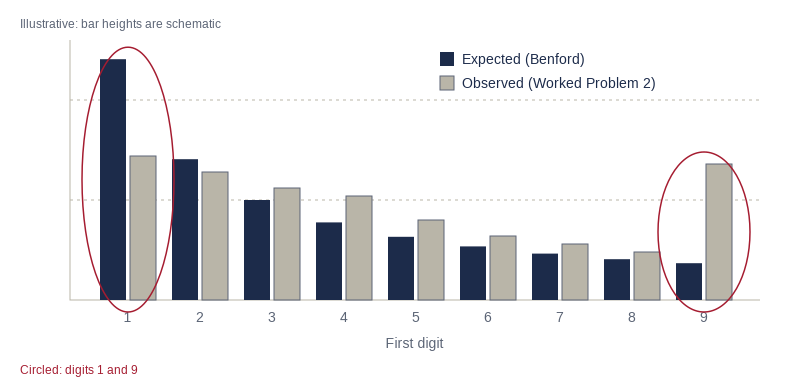
Problem 2: Benford, a spike at digit 9
Dhruv Mills me Rs 50,000 se upar ke payment par GM ki approval chahiye. Maan lijiye ek clerk bills ko limit ke neeche tod raha hai (splitting). 100 payment vouchers ka data:
| Digit | 1 | 2 | 3 | 4 | 5 | 6 | 7 | 8 | 9 |
|---|---|---|---|---|---|---|---|---|---|
| Observed | 8 | 10 | 9 | 10 | 9 | 11 | 12 | 13 | 18 |
| Expected | 30.1 | 17.6 | 12.5 | 9.7 | 7.9 | 6.7 | 5.8 | 5.1 | 4.6 |
| (O minus E) squared / E | 16.23 | 3.28 | 0.98 | 0.01 | 0.15 | 2.76 | 6.63 | 12.24 | 39.03 |
Solution. Chi-square lagbhag 81.3, df = 8, critical value 15.51 se bahut upar. Sabse bada yogdan digit 9 (39.03) aur digit 1 (16.23) ka hai: 18 vouchers 9 se shuru hue jabki expected lagbhag 4.6 the, aur 1 se sirf 8 jabki expected lagbhag 30.
Drill-down. (1) 9 aur 8 wale vouchers filter karo, jo limit ke paas hain. (2) Vendor-wise group karo. (3) Same vendor ke ek hi hafte ke payments jodo; agar jod kar limit paar hoti hai, to splitting ka shak. (4) Approval record dekho. (5) Result ko exception report me daalo. (Source chapter me chi-square 81.6 likha tha; dohrane par 81.3 aaya, isliye yahan 81.3 diya gaya hai.)
Problem 3: Ratio and trend analysis
Maya Pvt Ltd ka practice data (Rs lakh):
| Item | Year 1 | Year 2 | Year 3 |
|---|---|---|---|
| Sales | 1,000 | 1,200 | 1,500 |
| Receivables | 100 | 180 | 330 |
| Cost of goods sold | 700 | 840 | 1,080 |
| Operating cash flow | 105 | 60 | 10 |
| Net profit | 110 | 140 | 175 |
Solution. DSO = Receivables / Sales x 365: Year 1 = 100/1,000 x 365 = 36.5 din; Year 2 = 180/1,200 x 365 = 54.75 din; Year 3 = 330/1,500 x 365 = lagbhag 80.3 din. Gross margin = (Sales minus COGS) / Sales: Year 1 = 30 percent; Year 2 = 30 percent; Year 3 = (1,500 minus 1,080)/1,500 = 28 percent. Net profit 110 se 175 tak badhta hai, par operating cash flow 105 se 10 tak girta hai, yani accruals badh rahe hain.
Interpretation. Sales 50 percent badhi (1,000 se 1,500), par receivables 3 guna se zyada (100 se 330). DSO 36 se 80 din ho gaya. Ya to customers der se pay kar rahe hain, ya sales asli nahi hain. Teen follow-up: top 10 receivables ka confirmation, year-end ke paas sales ka cut-off test, aur baad me aaye credit notes. Sirf ek ratio se faisla nahi hota.
Problem 4: Beneish M-score, full computation
Dhruv Mills ka practice data (Rs crore):
| Item | Year t-1 | Year t |
|---|---|---|
| Net receivables | 100 | 180 |
| Sales | 1,000 | 1,200 |
| COGS | 700 | 840 |
| Current assets | 600 | 700 |
| PP&E | 450 | 500 |
| Securities | 0 | 0 |
| Total assets | 1,300 | 1,500 |
| Depreciation | 50 | 60 |
| SG&A | 100 | 120 |
| Current liabilities | 380 | 400 |
| Long-term debt | 290 | 300 |
| Income from continuing operations | 110 | 140 |
| Cash flow from operations | 105 | 60 |
Solution.
- DSRI = (180/1,200) / (100/1,000) = 0.15 / 0.10 = 1.50
- GMI = [(1,000 minus 700)/1,000] / [(1,200 minus 840)/1,200] = 0.30 / 0.30 = 1.00
- AQI = [1 minus (700 + 500 + 0)/1,500] / [1 minus (600 + 450 + 0)/1,300] = 0.2 / 0.1923 = lagbhag 1.04
- SGI = 1,200 / 1,000 = 1.20
- DEPI = [50/(450 + 50)] / [60/(500 + 60)] = 0.10 / 0.1071 = 0.933
- SGAI = (120/1,200) / (100/1,000) = 1.00
- LVGI = [(400 + 300)/1,500] / [(380 + 290)/1,300] = 0.4667 / 0.5154 = 0.905
- TATA = (140 minus 60) / 1,500 = 0.0533
Terms: 0.92 x 1.50 = 1.380; 0.528 x 1.00 = 0.528; 0.404 x 1.04 = 0.420; 0.892 x 1.20 = 1.070; 0.115 x 0.933 = 0.107; −0.172 x 1.00 = −0.172; 4.679 x 0.0533 = 0.250; −0.327 x 0.905 = −0.296. Jod = 3.287. M = −4.84 + 3.287 = lagbhag −1.55.
Kyunki −1.55 threshold −1.78 se upar hai, Dhruv Mills "likely manipulator" zone me hai.[4] Iska matlab fraud nahi, zyada jaanch hai. Sabse bada contribution DSRI (1.380) ka hai, isliye receivables par focus: confirmation, ageing aur credit notes. Exam trap: −2.50 safe taraf hai, −1.50 danger taraf; "less than" aur "greater than" ulta na karein.
Problem 5: Duplicate, gap and three-way match
Kalpana Traders ke 12 purchase invoices ka sample:
| Inv No | Vendor | Date | Amount (Rs) | PO? | GRN? |
|---|---|---|---|---|---|
| 1041 | Shree Pipes | 02 Apr | 38,000 | Yes | Yes |
| 1042 | Om Traders | 03 Apr | 12,500 | Yes | Yes |
| 1043 | Shree Pipes | 05 Apr | 38,000 | Yes | Yes |
| 1044 | Ravi Sales | 06 Apr | 49,500 | No | Yes |
| 1046 | Om Traders | 08 Apr | 12,500 | Yes | No |
| 1047 | Shree Pipes | 09 Apr | 38,000 | Yes | Yes |
| 1048 | Ravi Sales | 10 Apr | 49,500 | No | No |
| 1049 | Om Traders | 11 Apr | 7,200 | Yes | Yes |
| 1050 | Sunil Store | 12 Apr | 9,800 | Yes | Yes |
| 1051 | Sunil Store | 12 Apr | 9,800 | Yes | Yes |
| 1052 | Ravi Sales | 13 Apr | 49,500 | No | No |
| 1053 | Om Traders | 14 Apr | 7,200 | Yes | Yes |
Solution.
- Gap test: sequence me 1045 missing hai. Poochho: cancelled, voided ya kisi ne hata diya.
- Duplicate test: Shree Pipes ne 38,000 teen baar (1041, 1043, 1047); Om Traders 12,500 do baar (1042, 1046) aur 7,200 do baar (1049, 1053); Sunil Store 9,800 same date par do consecutive invoice numbers (1050, 1051), jo strong duplicate shak hai; Ravi Sales 49,500 teen baar (1044, 1048, 1052).
- Three-way match: 1044 me PO nahi; 1046 me GRN nahi; 1048 aur 1052 me na PO na GRN.
| Test | Exceptions |
|---|---|
| Gap | 1 (1045) |
| Duplicate suspects | 1050/1051 (same date), plus repeated amounts |
| No PO | 1044, 1048, 1052 |
| No GRN | 1046, 1048, 1052 |
Ravi Sales me teen cheezein ek saath hain: amount limit ke neeche (agar approval limit Rs 50,000 maane), PO nahi aur GRN nahi. Yeh fictitious vendor ka classic pattern hai, isliye agla kadam vendor master me jaana hai: address, bank account aur GST number (practice data me GST number nahi diya gaya). Fark: duplicate payment me bank detail same hoti hai; fictitious vendor me vendor ka existence hi nahi hota.
Problem 6: Ghost employee test
Dhruv Mills payroll (practice data):
| Emp ID | Name | Bank A/c ending | Access-card swipes (month) | Leave records | Salary (Rs) |
|---|---|---|---|---|---|
| 201 | A. Verma | 4412 | 22 | 2 | 28,000 |
| 202 | B. Khan | 5530 | 21 | 1 | 31,000 |
| 203 | C. Rao | 7781 | 0 | 0 | 26,000 |
| 204 | D. Das | 7781 | 0 | 0 | 26,000 |
| 205 | E. Iyer | 1129 | 20 | 3 | 29,000 |
| 206 | F. Nair | 9942 | 0 | 0 | 33,000 |
Solution. (1) Bank match: 203 aur 204 ka same account (7781), do alag log, ek account: flag. (2) Access vs payroll: 203, 204 aur 206 ke swipes 0 aur leave 0, par salary milti hai: flag. (3) Master data: HR file me joining date aur supervisor check karo; kya 206 ka koi supervisor sign karta hai. (4) Physical verification: surprise muster, jisme kuch employees ko dekhkar hi salary di jaye.
Result: 203, 204 aur 206 "exceptions" hain, "ghost" nahi. Zero swipe ka karan work-from-field ya sabbatical bhi ho sakta hai, isliye pehle confirm karte hain. Do alag employees ka ek account aam taur par parivaar ke sadasyon me hota hai; agar dono alag departments me hon aur dono ke swipe zero hon, to shak gehra hota hai. Satyam ka sourced udaharan: 53,000 reported, 40,000 actual, antar 13,000.[7]
Problem 7: Section 143(12) reporting
Do alag frauds ke case lijiye (kalpanik amounts): A me Rs 1.5 crore ka fraud, B me Rs 60 lakh ka fraud. Auditor ko kya karna hoga?
Solution. A ki amount Rs 1 crore se zyada hai, isliye auditor 2 din ke andar Board ya Audit Committee ko batata hai aur 45 din me reply maangta hai; phir 15 din ke andar Central Government ko Form ADT-4 me electronically report bhejta hai.[9] B ki amount Rs 1 crore se kam hai, isliye auditor 2 din ke andar Audit Committee ya Board ko report karta hai, aur company Board's Report me uski details batati hai.[9]
17.10 Chapter summary
Forensic audit fraud ka kisne, kaise, kitna aur court me saboot, in prashnon par kaam karta hai; chain of custody saboot ki vishvasniyata banati hai. Fraud triangle (pressure, opportunity, rationalization) fraud ka karan samjhata hai, aur auditor sabse zyada opportunity ko control se kam karta hai. Red flags jaanch ka karan hain, proof nahi. Beneish M-score 8 ratios se manipulation ki probability aankta hai, threshold −1.78 hai, aur financial institutions par lagu nahi hota. Benford's law pehle digit 1 ke liye lagbhag 30.1 percent batata hai aur tightly bounded data par galat alarm de sakta hai. Duplicate, gap, three-way match aur ghost employee tests existence aur authorisation par kaam karte hain. Lapping aur kiting purane classic fraud hain, jinhe customer ledger match aur bank reconciliation se pakda jata hai. Section 143(12) aur Rule 13 fraud ki reporting ki timeline aur Rs 1 crore ka threshold tay karte hain, aur Section 447 saza deti hai. Investigation 8 steps me hoti hai: shak, scope, evidence, analysis, interview, quantify, report, follow-up. Har tool ek signal deta hai; unhe jodkar dekhne aur har exception ka karan poochhne se hi fraud pakda jata hai.
17.11 Review questions
Short-answer questions
- Forensic audit aur normal audit me prashn ka kya fark hai?
- Chain of custody define kijiye aur uska mahatva likhiye.
- Fraud triangle ke teen elements likhiye aur batayiye ki auditor kis element ko sabse zyada control karta hai.
- Beneish M-score ke threshold ka matlab samjhaiye. Kis type ki company par yeh lagu nahi hota?
- Benford's law ka formula likhiye aur ek limit batayiye.
- Three-way match ke teen documents kaun se hain aur yeh kis risk ko pakadta hai?
- Lapping aur check kiting me fark likhiye.
- Rule 13 ke mutabik Rs 1 crore ya usse zyada ke fraud par auditor ki reporting timeline likhiye.
- Section 447 me public interest wale fraud ki minimum saza kya hai?
- Ghost employee test me kaun se independent evidence zyada vishvasniya hain aur kyun?
Answer pointers. (1) Misstatement versus kisne, kitna, court me saboot. (2) Saboot ka poora record. (3) Pressure, opportunity, rationalization; opportunity. (4) −1.78 se upar zyada risk; financial institutions. (5) P(d) = log10(1 + 1/d); tight range data. (6) PO, GRN, Invoice; fake ya unauthorised purchases. (7) Lapping customer payments ki chain hai; kiting bank float ka misuse. (8) 2 din Board/Audit Committee, phir 15 din me Central Government. (9) Kam se kam 3 saal. (10) Access card, bank, muster; HR register se bahar.
Multiple-choice questions
Q1. Benford's law ke hisab se digit 1 lagbhag kitne percent baar pehla digit hota hai? a) 11 percent b) 5 percent c) 30 percent d) 50 percent
Answer: c. Uniform hone par 11.1 percent hota, real data me lagbhag 30.1 percent.
Q2. Benford's law ke table me digit 9 ka expected percent kya hai? a) 17.6 b) 4.6 c) 11.1 d) 30.1
Answer: b. Table ke mutabik 4.6 percent.
Q3. Benford's law sabse accurate kab lagta hai? a) Tight range data b) Sirf 5 values c) Kai orders of magnitude me phaila data d) Sirf cheques
Answer: c. Tight range me misapplication hota hai.
Q4. Problem 2 me chi-square lagbhag 81 aaya. Iska sahi arth kya hai? a) Fraud prove hua b) Koi shak nahi c) Data kharab hai d) Bada deviation, isliye drill-down chahiye
Answer: d. Yeh flag hai, proof nahi.
Q5. M-score ka threshold kya hai? a) −1.78 b) 1.78 c) 0 d) −4.84
Answer: a. −1.78 se upar manipulator ka zyada chance hai.
Q6. M-score ke kitne variables hain? a) 5 b) 10 c) 8 d) 3
Answer: c. DSRI, GMI, AQI, SGI, DEPI, SGAI, LVGI aur TATA.
Q7. DSRI badhne ka matlab kya hai? a) Receivables sales se zyada tezi se badhe b) Cash badha c) Debt ghata d) Tax kam hua
Answer: a. Yeh revenue inflation ka sanket ho sakta hai.
Q8. Gap test kya dhoondta hai? a) Duplicate payments b) Wrong rate c) Late payments d) Missing sequence numbers
Answer: d. Jaise invoice 1045 ka missing hona.
Q9. Splitting kya hai? a) Shares todna b) Bill ko approval limit ke neeche todna c) Dividend baantna d) Loss hatana
Answer: b. Isse approval limit bypass hoti hai.
Q10. Fraud ki amount Rs 1 crore ya usse zyada ho to Rule 13 ke mutabik Central Government ko report kitne din ke andar jaati hai (Board ya Audit Committee ko batane ke baad)? a) 15 din b) 2 din c) 45 din d) 60 din
Answer: a. 2 din Board/Audit Committee ko batane ke liye, 45 din reply ke liye, aur 15 din Central Government ko report ke liye.
Notes and references
Access date for all web sources: 27 November 2026.
[1] Wikipedia, "Donald R. Cressey", Wikipedia, 2026-11-27, https://en.wikipedia.org/wiki/Donald_R._Cressey. Supports: Cressey (1919 to 1987), American criminologist at UC Santa Barbara, credited with the fraud triangle, author of Other People's Money on embezzlement; the page notes he did not use the term himself.
[2] Journal article on the origin of the fraud triangle, doi.org, 2026-11-27, https://doi.org/10.1108/jfc-10-2020-0204. Supports: Cressey never referred to a fraud triangle in his published work; the three elements derive from his research.
[3] Wikipedia, "Benford's law", Wikipedia, 2026-11-27, https://en.wikipedia.org/wiki/Benford%27s_law. Supports: digit 1 about 30 percent, digit 9 under 5 percent, uniform 11.1 percent; formula P(d)=log10(1+1/d); table of leading-digit probabilities; accuracy for data spanning several orders of magnitude; misapplication to election returns with tightly bounded data; second-digit test in election forensics; Benford 1938 and Newcomb 1881.
[4] Wikipedia, "Beneish M-score", Wikipedia, 2026-11-27, https://en.wikipedia.org/wiki/Beneish_M-Score. Supports: the eight-variable formula and coefficients; threshold of −1.78 and the −2.50 example; probabilistic model excluding financial institutions; Cornell students identifying Enron in 1998.
[5] Wikipedia, "Enron scandal", Wikipedia, 2026-11-27, https://en.wikipedia.org/wiki/Enron_scandal. Supports: earnings reduced by $405 million and indebtedness increased by $628 million after the Chewco/JEDI correction.
[6] Wikipedia, "WorldCom scandal", Wikipedia, 2026-11-27, https://en.wikipedia.org/wiki/WorldCom_scandal. Supports: committee and KPMG conclusion that amounts were transferred to meet Wall Street targets; basic T accounts revealing funds moving from the income statement to the balance sheet; 49 entries totalling $3.8 billion; "SS entry" labels.
[7] Wikipedia, "Satyam scandal", Wikipedia, 2026-11-27, https://en.wikipedia.org/wiki/Satyam_scandal. Supports: 40,000 actual versus 53,000 reported employees; Rs 200 million monthly for 13,000 non-existent employees (alleged).
[8] Wikipedia, "Check kiting", Wikipedia, 2026-11-27, https://en.wikipedia.org/wiki/Check_kiting. Supports: kiting uses float, a cheque from one bank covered by a cheque from another, both without funds; term in use from the 1920s; "flying a kite".
[9] ca2013.com, "Rule 13, Companies (Audit and Auditors) Rules, 2014", 2026-11-27, https://ca2013.com/rule-13-companies-audit-and-auditors-rules2014/. Supports: Rs 1 crore threshold; 2 days to the Board or Audit Committee; 45 days for reply; 15 days to the Central Government; Form ADT-4 filed electronically; below Rs 1 crore, report to the Audit Committee or Board within 2 days and Board's Report disclosure.
[10] LawSathi, "Section 447, Companies Act 2013", 2026-11-27, https://research.lawsathi.in/acts/companies-act-2013/section-447/. Supports: 6 months to 10 years; fine from the fraud amount up to three times; public interest minimum 3 years; small fraud (below Rs 10 lakh or 1 percent of turnover) up to 5 years, fine up to Rs 50 lakh, or both.
[11] Institute of Chartered Accountants of India, "Auditing, Review and Other Standards (formerly known as AASs): complete text", icai.org, 2026-11-27, https://icai.org/post/auditing-review-and-other-standards-formerly-known-as-aas-complete-text. Supports: SA 200, 240 and 250 titles confirmed on the ICAI list; SA 315, 330, 505, 550 and 580 numbers follow standard ICAI numbering.
[12] Source chapter attributions without a linked source: the fraud diamond (adding capability to the triangle) and the ACFE occupational fraud classification. The source chapter reports these as verified in a separate fact-check file that was not in the bundle. Verify before publication.