IT Audit and Data Analytics
Abstract
Jab accounting records computer me rakhe jate hain, to auditor ko do prashn poochhne padte hain: kya system par bharosa kiya ja sakta hai, aur system ke data se kya jaanch ho sakti hai. Yeh chapter pehle prashn ko IT general controls, application controls, segregation of duties aur audit trail ke zariye samjhata hai. Doosre prashn ko computer-assisted audit techniques (CAAT) ke zariye, jisme SQL, Excel aur Python ke chhote examples hain. Chapter me COBIT, SOX aur Wirecard aur Luckin ke cases bhi shamil hain. Practice data kalpanik hai; real company figures sirf noted sources ke saath diye gaye hain.
Learning objectives
Is chapter ke baad reader:
- define kar sakega IT general controls (ITGC), application controls aur CAAT ko;
- distinguish kar sakega ITGC aur application controls me, aur batayega ki ITGC kamzor hone par auditor ki reliance par kya asar padta hai;
- evaluate kar sakega ek user-rights matrix me segregation of duties ke conflicts ko;
- apply kar sakega duplicate, gap, three-way match aur just-below-limit tests SQL me;
- analyse kar sakega ek audit log me suspicious pattern ko aur log ki apni integrity ko;
- explain kar sakega ki "information produced by the entity" ka test kyun zaroori hai, Wirecard ke sandarbh me.
18.1 Introduction and research question
Pehle ke chapters me records, evidence aur fraud detection padhe gaye. Ab zyadatar records kisi ERP ya database me hote hain, jahan koi haath se register nahi likhta. Is chapter ka prashn yeh hai: jab sab kuch computer me hota hai, to auditor system ke controls aur system ke data, dono par kaise bharosa ya jaanch karta hai?
Do alag kaam hain. Pehla, IT audit, jo system ke internal control ke design aur effectiveness ko dekhta hai: security, development process aur IT governance.[1] Doosra, data analytics, jo computer ke zariye saare data par tests chalata hai. Order yaad rakhne layak hai: pehle IT general controls, phir application controls, phir analytics.
18.2 Foundations of IT audit
18.2.1 Confidentiality, integrity, availability
IT audit ki teen major requirements hain: confidentiality (sirf authorised log dekhein), integrity (data sahi aur authorised tareeke se hi badle) aur availability (jab chahiye tab data mile).[1] Source ke mutabik controls ka "installed" hona kaafi nahi hai; dekhna padta hai ki wo as intended installed hain, effective hain, aur koi breach hua ya nahi.[1] Isliye test of design aur test of operating effectiveness alag hote hain.
IT audit financial statement audit se alag hai, jo dekhta hai ki financial statements fair present hue ya nahi.[1] Kuch classification IT audit ko do prakaar me baantte hain: general control review aur application control review.[1]
18.2.2 COBIT
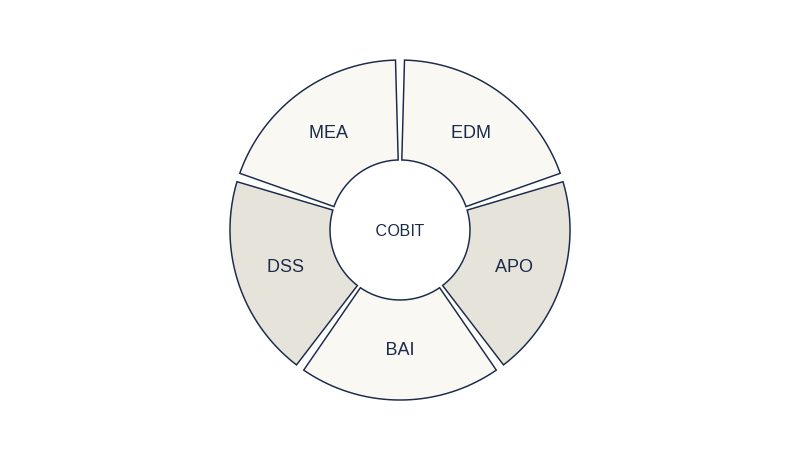
COBIT (Control Objectives for Information and Related Technologies) ISACA ka framework hai, jo IT management aur IT governance ke liye hai. Iske paanch process domains hain: EDM, APO, BAI, DSS aur MEA.[5]
| Code | Full name | Meaning |
|---|---|---|
| EDM | Evaluate, Direct and Monitor | Board ka kaam: dekhna, disha dena, nigrani |
| APO | Align, Plan and Organize | Plan aur structure |
| BAI | Build, Acquire and Implement | Banana, khareedna, lagana |
| DSS | Deliver, Service and Support | Chalana aur sahayata dena |
| MEA | Monitor, Evaluate and Assess | Naapna aur assess karna |
COBIT 2019 framework ke ek copy ke mutabik EDM governance objectives ka domain hai, jisme boards aur executive management accountable hain; baaki chaar (APO, BAI, DSS, MEA) management objectives ke domains hain, jinke liye senior aur middle management zimmedar hain.[6] Yeh PDF copy COBIT 2019 framework ki hai; Wikipedia ka page sirf paanch process ke naam deta hai.[5]
18.2.3 ITGC, application controls and reliance
IT General Controls (ITGC) poore IT system par lagu hone wale controls hain. Source ke mutabik common ITGC ye hain: logical access, system development life cycle (SDLC), program change management, data center physical security, backup aur recovery, aur computer operations.[2] Application controls ek specific software ke andar ke controls hain (input, processing, output, interface). Udaharan: invoice me negative quantity allow nahi hoti, ya payment tabhi jati hai jab PO match ho.
Hierarchy yeh hai: agar ITGC effective ho, to auditor automated application controls par rely kar sakta hai aur testing kam kar sakta hai. Agar ITGC ineffective ho, to automated controls par reliance nahi ki ja sakti aur substantive procedures ya analytics ka weight badhta hai.
18.2.4 Information produced by the entity
Information Produced by the Entity (IPE) management ki wo report ya data hai jise auditor evidence ke roop me use karta hai. Analytics ka base data sahi ho, iske liye IPE ki completeness aur accuracy test karni padti hai. ISA 500 ke para 9 ke mutabik auditor ko dekhna hota hai ki aisi information kaafi reliable hai ya nahi, jisme uski accuracy aur completeness ka audit evidence lena shamil hai.[12] "IPE" short form firms ka prayog hai. Practical step: data extract ki completeness ko GL total se reconcile karna. Related standards: SA 500 (evidence), SA 315 (IT environment ki samajh), SA 402 (service organisations, jaise cloud ya SaaS me SOC reports), SA 240 (journal entry testing).[15]
Critical discussion
Teen seemayein yaad rakhne layak hain. Pehli, ITGC ki effectiveness automated controls par reliance ki sharat hai, guarantee nahi. Doosri, cloud ya SaaS systems me service organisation ka control auditor ke direct reach me nahi hota, isliye SOC reports par nirbharta aati hai.[15] Teesri, IPE ke bina analytics sirf "garbage in, garbage out" ho sakta hai. Source chapter ke mutabik SA numbers ICAI numbering ke saath verify hue; code snippets aur CAAT ki definition source writer ki apni hain.
18.3 IT general controls and segregation of duties
18.3.1 Six control areas
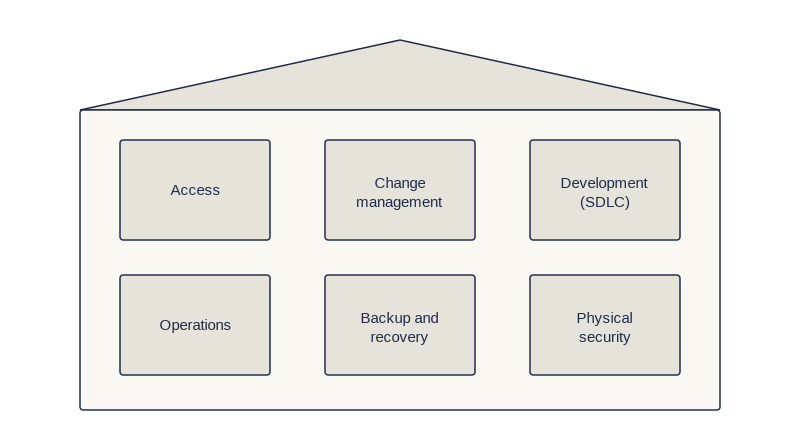
| Control | Meaning | Example | Auditor's test |
|---|---|---|---|
| Logical access | Kaun kya dekh ya badal sakta hai | Unique ID, strong password, MFA | User list versus HR list; leavers ka access band hua? |
| Program change | Software me badlav approve hokar jaye | Change ticket, test, approval | Sample changes ka ticket aur approval |
| SDLC | Naya software theek se bana | Requirement, testing, UAT | Documentation aur sign-off |
| Operations | Jobs time par aur sahi chalein | Job scheduling, monitoring | Failed jobs ka follow-up |
| Backup and recovery | Data kho jaye to wapas aa sake | Daily backup, restore test | Restore test ka saboot |
| Physical security | Server room surakshit | Lock, CCTV, visitor log | Walkthrough |
18.3.2 Segregation of duties
Segregation of duties (SoD) ka principle hai ki kaam ko kai logon me baanta jaye, taaki koi ek vyakti poori process control na kare.[3] Source ke mutabik chaar functions hote hain: authorisation, custody, record keeping aur reconciliation; ek hi vyakti in me se ek se zyada na kare. Cheque par do signature classic example hai.[3] SoD ka asli udeshya fraud aur errors rokna hai, speed badhana nahi. Iska cost hota hai (zyada log, zyada time), isliye suraksha ko cost aur effort ke saath balance karna padta hai, aur chhoti companies me compensating controls diye jate hain.[3]
Worked problem 1 ek user-rights matrix me SoD conflicts ka test dikhata hai.
18.4 Application controls
- Input controls: mandatory fields, format check (jaise PAN ka format), range check (quantity 1 se 10,000), aur duplicate check (same invoice number dobara nahi).
- Processing controls: automatic calculation (GST, discount) aur batch totals ka match.
- Output controls: reports ka distribution sirf authorised logon ko, aur exception reports ka review.
- Interface controls: jab ek system se doosre me data jaye, to total match ho (jaise sales system se GL).
Udaharan. Sales system me 20 percent se zyada discount tabhi allow hai jab manager approve kare. Auditor test karega: 25 percent discount ka invoice banane ki koshish karega (ya system configuration dekhega). Agar system bina approval ke chhod de, to control fail hai.
18.5 Audit trail and change management
Audit trail (audit log) ek chronological record hai jo documentary evidence deta hai ki kisne, kab, kya kiya. Source ke mutabik process privileged mode me chalni chahiye aur normal user ise stop ya change na kar sake.[4] Isliye auditor pehle log ki apni protection dekhta hai (kya log database me hash ya read-only copy hai), phir log ka content.
Change management ka test: har change ke liye request, approval, testing aur migration ka record dekho. Production me direct change ek control weakness hai. Worked problem 2 ek log review ka example hai.
Evidence preserve karne ke bare me source chapter WorldCom ka udaharan deta hai: wahan internal audit team ne server activity se bachne ke liye raat me kaam kiya, kyunki din me data nikalne se server activity badh jati thi.[9] Audit me log ko bina shor kiye preserve karna chahiye, par senior ko report karte hue.
18.6 Data analytics and CAAT
18.6.1 What CAAT is
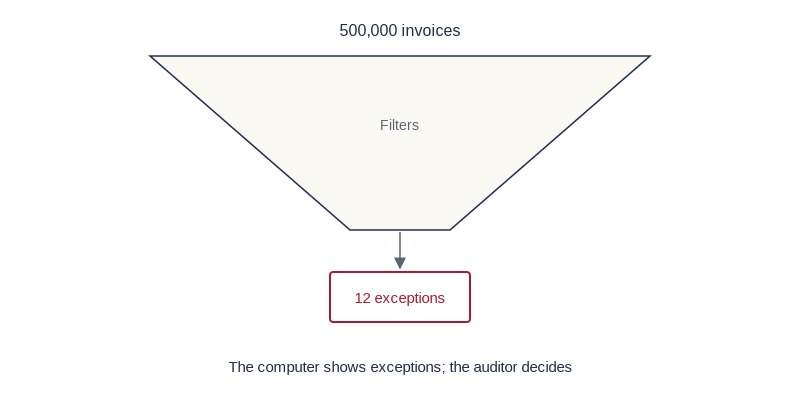
CAAT (computer-assisted audit tools and techniques) ka arth hai audit ko automate karne ke liye computer ka use; isme spreadsheets aur specialised software dono aa sakte hain. Traditional audit sample par chalta hai, jabki CAATTs har transaction test kar sakte hain.[7] Audit software ke functions me data queries, stratification, sample extraction, missing sequence identification, statistical analysis, duplicate transaction identification aur pivot tables aate hain. Software aam taur par read-only copy par kaam karta hai taaki original data corrupt na ho.[7]
18.6.2 Standard tests
- Duplicate payments: same vendor, same amount, same date.
- Gaps: invoice ya cheque numbers me missing sequence.
- Weekend ya holiday entries: journal entries jinki date non-working din ki hai.
- Round numbers: jaise Rs 1,00,000 exactly.
- Just below limit: approval limit Rs 50,000 ho aur bahut saari entries Rs 49,xxx ki hon.
- Benford's law (Chapter 17).
- Ageing: receivables 180 din se upar.
- Joins: vendor bank account employee bank account ke barabar.
- Outliers: z-score ya box plot.
- Stratification: amounts ko groups me baant kar dekhna.
18.6.3 Illustrative code
Maan lijiye table payments(vendor_id, invoice_no, amount, pay_date) hai.
```sql -- Duplicate payments: same vendor, same amount, same date SELECT vendor_id, amount, pay_date, COUNT() AS times_paid FROM payments GROUP BY vendor_id, amount, pay_date HAVING COUNT() > 1;
-- Entries just below the limit (limit = 50000) SELECT * FROM payments WHERE amount BETWEEN 49000 AND 49999;
-- Ghost employee clue: employee and vendor share a bank account SELECT e.emp_id, v.vendor_id, e.bank_acc FROM employees e JOIN vendors v ON e.bank_acc = v.bank_acc; ```
Excel me duplicates: COUNTIFS(vendor, A2, amount, B2, date, C2) > 1; weekend: WEEKDAY(date, 2) > 5; round figure: MOD(amount, 1000) = 0.
python
import pandas as pd
df = pd.read_csv("payments.csv")
dups = df[df.duplicated(["vendor_id", "amount", "pay_date"], keep=False)]
weekend = df[pd.to_datetime(df["pay_date"]).dt.weekday >= 5]
print(len(dups), len(weekend))
18.6.4 Journal entry testing (JET)
WorldCom ka pattern yeh tha: income statement se balance sheet me irregular movement, aisi entries ke saath jinka supporting documentation nahi tha.[9] Aur kuch entries par "SS entry" label tha.[9] Iske aadhar par JET ke steps:
- ERP se sab journal entries export karo (entry id, date, user, debit account, credit account, amount, description, support flag).
- Filter A: debit account asset (jaise fixed assets ya CWIP) aur credit account expense (jaise line cost ya repairs).
- Filter B: posting date quarter-end ke last 3 din.
- Filter C: support flag = No.
- Filter D: amount round (multiple of 1,00,000).
- Score: jitne filter match hon, utna zyada risk; 3 ya 4 match hon to pehle jaanch.
sql
-- Pseudo-SQL: quarter_end is a placeholder; real column names will differ
SELECT je_id, post_date, user_id, amount
FROM journal
WHERE dr_acct_type = 'ASSET' AND cr_acct_type = 'EXPENSE'
  AND support_flag = 'N'
  AND post_date >= quarter_end - 3
ORDER BY amount DESC;
Yeh script chalayi nahi gayi, isliye iska output nahi diya gaya.
Critical discussion
CAAT ka output exception report hota hai, proof nahi. Har exception ko substantively verify karna padta hai: vendor ka existence, GRN, delivery challan. Jab CAAT se bahut zyada exceptions aayein (maan lijiye 4 lakh), to materiality aur risk ke hisab se stratify karein: top-value, high-risk vendors, repeated patterns. Dusri limit data ki quality hai: IPE ke bina result bharosemand nahi.
18.7 IT audit process, cyber risks and SOX
18.7.1 Steps of an IT audit
- Samajh: system, data flow, kaun sa software kya karta hai.
- Risk: kaun sa IT risk financial reporting ko prabhavit karta hai.
- ITGC test: access, change, operations, backup.
- Application control test: input, processing, output, interface.
- Data analytics: pehle population ki completeness, phir tests.
- Exceptions ka follow-up: explanation, saboot, adjustment.
- Documentation aur report: findings, severity, recommendations.
18.7.2 Cyber and emerging risks
Ransomware me data lock karke paise maange jate hain. Phishing me nakli email se password churaya jata hai. Insider threat me karmchari ka galat access hota hai. Cloud me vendor ke control par nirbharta hoti hai, isliye SOC report padhna zaroori hai. Source ke mutabik bade audit firms ne emerging technologies me bahut nivesh kiya hai aur AI general ledger review jaise kaam me use ho raha hai.[1] AI ka output auditor ki judgment ka replacement nahi hai; use verify karna padta hai.
18.7.3 Sarbanes-Oxley and IT controls
SOX 30 July 2002 ko enact hua. Iske baad top management ko financial information ki accuracy certify karni padti hai, aur PCAOB banaya gaya, jo public company auditors ki oversight karta hai.[13] Title VIII (Corporate and Criminal Fraud Accountability Act) financial records ke destruction ya alteration par criminal penalties lagata hai aur whistleblowers ko protection deta hai.[13] IT audit se link: financial reporting systems ke access, change aur log controls ka test SOX compliance ka hissa ban gaya. SEC staff statement me general IT controls (program development, program changes, computer operations, aur programs aur data ka access) ko management ke internal control over financial reporting assessment ka hissa mana gaya hai.[14] Source ke mutabik baad me kai deshon me SOX-type laws aaye, jinme India (2005) ka bhi naam page par hai.[13]
18.8 Case study: Wirecard and Luckin, independent versus entity-provided data
Wirecard (Germany, 2020)
€1.9 billion ki cash "missing" thi, aur Philippines ke do banks ne kaha ki unke paas yeh sum kabhi nahi thi.[11] EY ke mutabik ek trustee ne auditor ko "deceive" karne ki koshish ki.[11]
Audit failure. IT audit ke teen sawaal uthte hain: (1) bank balance ka evidence kahan se aaya: bank portal ka screenshot, system-generated statement, ya direct confirmation? (2) trustee ke diye PDF statement, screen share aur email attachment ko "client-provided" evidence maano, independent nahi. (3) Third-party acquiring partners ke revenue ka data kahan se aaya; system-generated report par tabhi bharosa karo jab uske source aur completeness ka test ho (IPE).
Lesson. Client ka system-generated report tab tak management representation jaisa hai jab tak aap uski completeness aur accuracy test na karein.[12]
Luckin Coffee (China, 2020)
Muddy Waters ke short report ne claim kiya ki per-store items sold teesri quarter 2019 me kam se kam 69 percent aur chauthi me 88 percent inflate the, 11,200 ghante ki video ke aadhar par.[10] Baad me internal investigation me company ne bataya ki COO ne 2019 ki sales lagbhag RMB 2.2 billion (US$310 million) fabricate ki.[10]
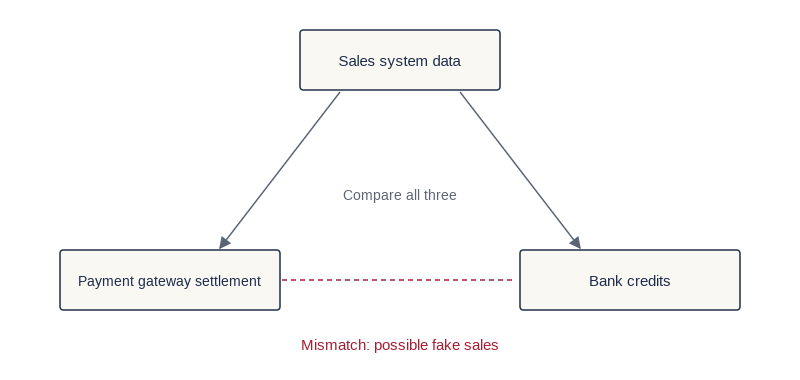
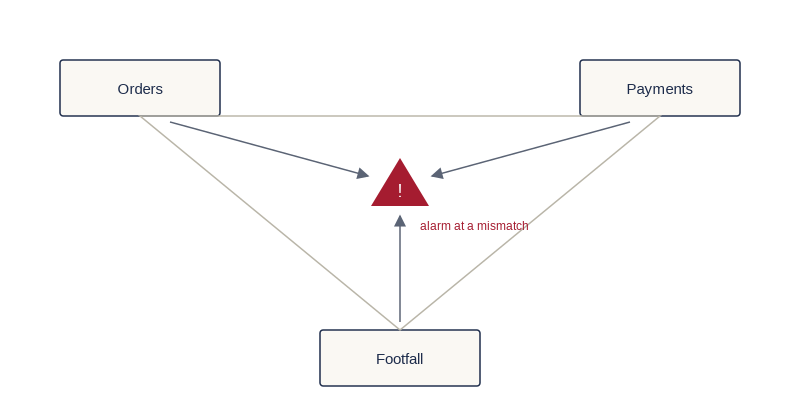
Analytics version. Auditor revenue ko store, din, ghanta, product aur payment method se tod kar dekhta. Steps: (1) order system se har store ke daily orders export karo; (2) independent data lo: payment gateway settlement, store footfall sensor, delivery-app orders; (3) orders aur footfall ka ratio match karo; agar ratio store dar store same ho aur doosre stores se bahut upar ho, to red flag; (4) duplicate order IDs, bina payment wale orders aur odd-hours orders dekho. Fraud company system ke andar bhi ho sakta hai, isliye external data (settlement, bank credits) se match karna zaroori hai.
Lessons
Dono cases me ek hi baat saamne aati hai: jab evidence ya data usi party se aaye jiski jaanch ho rahi hai, to uski independence kam hoti hai. Revenue ko ek aur data source se corroborate karna analytical procedure aur CAAT, dono ka milan hai.
18.9 Worked problems
Note. Jo invoice, payroll aur log data niche hai wo kalpanik practice data hai (Kalpana Traders aur Dhruv Mills). SQL aur Python outputs source chapter me chalakar verify kiye gaye the.
Problem 1: SoD matrix
Dhruv Mills ERP user rights:
| User | Create vendor | Approve PO | Post invoice | Release payment | Edit bank master |
|---|---|---|---|---|---|
| Anil (Purchase) | Yes | Yes | No | No | No |
| Bhavna (Accounts) | No | No | Yes | Yes | No |
| Chetan (Accounts) | Yes | No | Yes | Yes | Yes |
| Divya (IT admin) | No | No | No | No | Yes |
Conflict rules (auditor ne banaye): (1) create vendor + release payment; (2) post invoice + release payment; (3) edit bank master + release payment; (4) approve PO + create vendor.
Solution.
| User | Rules broken | Rating |
|---|---|---|
| Anil | Rule 4 | Conflict |
| Bhavna | Rule 2 | Conflict |
| Chetan | Rules 1, 2 aur 3 | Critical |
| Divya | Koi rule nahi | Red flag |
Chetan akela vendor bana sakta hai, invoice post kar sakta hai, payment release kar sakta hai aur bank account badal sakta hai: yeh fictitious vendor fraud ka pura chakra hai. Divya kisi rule ko nahi todti, par IT admin ka bank master edit karna khud ek red flag hai, kyunki IT admin ko business data nahi badalna chahiye. Auditor ka kadam: Chetan ke rights ke transaction log se dekhein ki usne kaun se vendor banaye aur kitna paisa nikla. Recommendation: rights alag karo, ya compensating control rakho: ek independent reviewer har hafte Chetan ke created vendors ki report dekhe.
Problem 2: Audit log review
Kalpana Traders ERP ka practice log:
| Time | User | Event | Object | Old value | New value |
|---|---|---|---|---|---|
| 22 Apr 23:41 | Chetan | Edit | Vendor 77 bank a/c | 4421 | 9958 |
| 22 Apr 23:44 | Chetan | Post | Invoice 1048 | 49,500 | |
| 22 Apr 23:47 | Chetan | Release | Payment run | 49,500 | |
| 22 Apr 23:52 | Chetan | Edit | Vendor 77 bank a/c | 9958 | 4421 |
| 22 Apr 23:55 | Chetan | Delete | Log entry #31 |
Solution. (1) Events raat 11:41 se 11:55 ke beech hue, office hours ke baahar. (2) Bank account badla, payment hua aur account wapas badla, sab 11 minute me (23:41 se 23:52): yeh "swap and restore" pattern hai. (3) Log entry delete karne ka right Chetan ke paas nahi hona chahiye. Agar tha, to audit trail ki integrity toot gayi. (4) Test: kya log database me hash ya read-only copy hai? Pehla sawal system ke baare me hai (system ne delete karne kyun diya), doosra user ke baare me. Exam trap: production me direct change aur log delete dono control weakness hain.
Problem 3: SQL tests
Table inv(inv_no, vendor, dt, amt, po, grn) Chapter 17 ke Worked Problem 5 ke 12 invoices ka hai.
```sql -- Test 1: Duplicate (vendor + amount) SELECT vendor, amt, COUNT() AS n, GROUP_CONCAT(inv_no) AS invoices FROM inv GROUP BY vendor, amt HAVING COUNT() > 1;
-- Test 2: Gap test SELECT a.inv_no + 1 AS missing_no FROM inv a LEFT JOIN inv b ON b.inv_no = a.inv_no + 1 WHERE b.inv_no IS NULL AND a.inv_no < (SELECT MAX(inv_no) FROM inv);
-- Test 3: Three-way match exceptions SELECT inv_no, vendor FROM inv WHERE po = 0 OR grn = 0;
-- Test 4: Same vendor, amount and date SELECT a.inv_no, b.inv_no FROM inv a JOIN inv b ON a.vendor = b.vendor AND a.amt = b.amt AND a.dt = b.dt AND a.inv_no < b.inv_no;
-- Test 5: Just below approval limit (assume limit 50,000) SELECT vendor, COUNT(*) n, SUM(amt) total FROM inv WHERE amt BETWEEN 45000 AND 49999 GROUP BY vendor; ```
Solution (outputs).
| Test | Output |
|---|---|
| 1 Duplicate | Om Traders 7,200 (1049, 1053); Om Traders 12,500 (1042, 1046); Ravi Sales 49,500 (1044, 1048, 1052); Shree Pipes 38,000 (1041, 1043, 1047); Sunil Store 9,800 (1050, 1051) |
| 2 Gap | 1045 |
| 3 Three-way match | 1044 Ravi Sales; 1046 Om Traders; 1048 Ravi Sales; 1052 Ravi Sales |
| 4 Same date | 1050, 1051 |
| 5 Below limit | Ravi Sales, 3 invoices, total Rs 148,500 |
Check: 3 x 49,500 = 148,500. Yahi 5 lines 12 rows ki jagah 12 lakh rows par bhi chalengi; sample me Ravi Sales ke teen invoice miss ho sakte the, poori population me nahi. Par yeh proof nahi hai: ab vendor ka existence, GRN aur delivery challan vouch karne honge.
Problem 4: Benford in Python, a small sample
```python import math from collections import Counter
amounts = [38000, 12500, 38000, 49500, 12500, 38000, 49500, 7200, 9800, 9800, 49500, 7200] first = [int(str(a)[0]) for a in amounts] count = Counter(first) n = len(first) print("digit observed% expected%") for d in range(1, 10): obs = 100 * count.get(d, 0) / n exp = 100 * math.log10(1 + 1 / d) print(d, round(obs, 1), round(exp, 1)) ```
Solution. Pehle digit ki ginti: digit 1 ke 2, digit 3 ke 3, digit 4 ke 3, digit 7 ke 2, digit 9 ke 2; baaki zero (isi ka nateeja 12 invoices ki list se seedha ginkar bhi milta hai). Observed percentages: 16.7, 0, 25, 25, 0, 0, 16.7, 0, 16.7. Sirf 12 values par Benford kaam nahi karta, kyunki sample chhota hai aur data ek tight range me hai; Benford tab best hai jab data kai orders of magnitude me phailay.[8] Yeh demo sirf code seekhne ke liye hai; asli audit me lakhon rows par chalayein. Rule: "right tool, right data."
Problem 5: JET scoring
Chaar entries ko Filters A se D par score kijiye (kalpanik data):
| JE | Debit asset, credit expense (A) | Last 3 days of quarter (B) | No support (C) | Round amount (D) |
|---|---|---|---|---|
| JE-1 | Yes | Yes | Yes | Yes |
| JE-2 | Yes | No | No | Yes |
| JE-3 | No | Yes | Yes | No |
| JE-4 | Yes | Yes | Yes | No |
Solution. Scores: JE-1 = 4, JE-2 = 2, JE-3 = 2, JE-4 = 3. Rule ke mutabik 3 ya 4 match wale entries pehle jaanche jayenge: JE-1 aur JE-4. JE-1 sabse upar, kyunki chaaron filter match hue. Iske baad entry banane wale ka user ID aur approver dekha jayega.
Problem 6: Stratifying CAAT exceptions
Scenario: CAAT se 4 lakh exceptions aaye. Aap kaise aage badhenge?
Solution. Sab par jaana na to sambhav hai, na zaroori. Materiality aur risk ke hisab se stratify karein: (1) top-value exceptions, (2) high-risk vendors, (3) repeated patterns, jaise ek hi vendor ke baar-baar aane wale exceptions. Targeted samples ko vouch karein aur explanation ka document rakhein.
18.10 Chapter summary
IT audit system ke internal control ke design aur operating effectiveness ko dekhta hai, jabki financial statement audit financial statements ke fair presentation ko. ITGC ke chhe area hain: logical access, program change, SDLC, operations, backup aur recovery, aur physical security. Application controls input, processing, output aur interface par kaam karte hain. Agar ITGC effective hain, to auditor automated controls par rely kar sakta hai; warna analytics aur substantive procedures ka weight badhta hai. Segregation of duties chaar functions ko alag rakhta hai: authorisation, custody, record keeping aur reconciliation. Audit log ko normal user badal na sake, aur log ki apni integrity pehle check hoti hai. CAAT poori population par tests chalata hai aur exception report deta hai, jisko vouch karna zaroori hai. Benford chhote ya tightly bounded data par theek kaam nahi karta. JET WorldCom ke pattern par based hai. Wirecard ka sabak yeh hai ki client ya trustee se aaya evidence independent nahi hota. SOX ne PCAOB banaya aur records ke destruction par criminal penalties lagayi.
18.11 Review questions
Short-answer questions
- IT audit aur financial statement audit me fark likhiye.
- Confidentiality, integrity aur availability ko ek ek line me define kijiye.
- ITGC ke chhe areas ke naam likhiye.
- ITGC ineffective hone par auditor ki reliance par kya asar padta hai?
- Segregation of duties ke chaar functions kaun se hain?
- Audit trail ki integrity kaise jaanchi jati hai?
- CAAT ki do mukhya visheshtayein likhiye aur ek limit batayiye.
- Information Produced by the Entity (IPE) ka test kyun zaroori hai?
- Journal entry testing me kaunse filters risk badhate hain?
- SOX Title VIII ke do mukhya prabandh kya hain?
Answer pointers. (1) Controls ki effectiveness versus fair presentation. (2) Section 18.2.1. (3) Section 18.3.1. (4) Automated controls par reliance nahi; substantive aur analytics ka weight badhta hai. (5) Authorisation, custody, record keeping, reconciliation. (6) Log ki protection, hash ya read-only copy. (7) Poori population, read-only copy; exceptions proof nahi hain. (8) Completeness aur accuracy ka evidence. (9) Asset debit aur expense credit, quarter-end, no support, round amount. (10) Records ke destruction par criminal penalties, whistleblower protection.
Multiple-choice questions
Q1. IT audit ka mukhya focus kya hai? a) Sirf hardware b) Tax c) Sirf software license d) Internal control ka design aur effectiveness
Answer: d. Source ke mutabik yeh financial statement audit se alag hai.
Q2. CIA triad me "I" kya hai? a) Integrity b) Inspection c) Internet d) Income
Answer: a. Data sahi aur authorised tareeke se hi badle.
Q3. COBIT ke paanch process me "DSS" ka kya arth hai? a) Data Security System b) Direct, Scan, Store c) Deliver, Service and Support d) Design, Set, Sign
Answer: c. Operations aur sahayata.
Q4. Segregation of duties ke chaar functions kaun se hain? a) Plan, do, check, act b) Authorisation, custody, record keeping, reconciliation c) Buy, sell, hold, pay d) Input, process, output, store
Answer: b. Ek vyakti ek se zyada na kare.
Q5. Audit trail ko kaun badal sakta hai? a) Sirf privileged process b) Koi bhi user c) Auditor d) Client
Answer: a. Normal user ko nahi badalna chahiye.
Q6. Audit software read-only copy par kyun kaam karta hai? a) Speed ke liye b) License ke liye c) Original data corrupt na ho isliye d) Colour ke liye
Answer: c. Source: CAAT page.
Q7. Log me ek hi user ne 11 minute me bank account badla, payment release kiya aur account wapas badla. Yeh kaunsa pattern hai? a) Normal batch processing b) Backup restore c) Duplicate payment d) Swap and restore
Answer: d. Aur log entry delete karna integrity ka saval banata hai.
Q8. Benford ko 12 invoices par chalana kyun theek nahi? a) Law galat hai b) Sample chhota aur data tight range me hai c) Python nahi chalega d) Digits nahi hote
Answer: b. Benford kai orders of magnitude me phaile bade data par best hai.
Q9. Wirecard me kaunsa evidence sabse kamzor tha? a) Direct bank reply b) Cash count c) Independent statement d) Trustee ya client ka diya evidence
Answer: d. EY ke mutabik trustee ne auditor ko deceive karne ki koshish ki.
Q10. SOX ne kaunsi body banayi? a) SEBI b) ICAI c) PCAOB d) CAG
Answer: c. Public company auditors ki oversight ke liye.
Notes and references
Access date for all web sources: 27 November 2026.
[1] Wikipedia, "Information technology audit", Wikipedia, 2026-11-27, https://en.wikipedia.org/wiki/Information_technology_audit. Supports: IT audit evaluates internal control design and effectiveness (security protocols, development processes, IT governance); difference from financial statement audit; confidentiality, integrity, availability; installing controls necessary but not sufficient; classification as general control review or application control review; Big Four investment in emerging technologies and AI for general ledger review.
[2] Wikipedia, "IT general controls", Wikipedia, 2026-11-27, https://en.wikipedia.org/wiki/IT_general_controls. Supports: common ITGCs (logical access, SDLC, program change management, physical security, backup and recovery, computer operations).
[3] Wikipedia, "Segregation of duties", Wikipedia, 2026-11-27, https://en.wikipedia.org/wiki/Segregation_of_duties. Supports: principle of splitting duties; four functions; two-signature cheque example; balancing protection with cost and effort.
[4] Wikipedia, "Audit trail", Wikipedia, 2026-11-27, https://en.wikipedia.org/wiki/Audit_trail. Supports: chronological record; should not be changeable by a normal user.
[5] Wikipedia, "COBIT", Wikipedia, 2026-11-27, https://en.wikipedia.org/wiki/COBIT. Supports: framework by ISACA; five processes EDM, APO, BAI, DSS, MEA.
[6] ISACA, "COBIT 2019 Framework" (PDF copy), erp.ebsafr.com, 2026-11-27, https://erp.ebsafr.com/files/COBIT%202019%20Framework%20-%20PDF.pdf. Supports: governance objectives relate to governance processes, with boards and executive management accountable; management processes are the domain of senior and middle management; five domains.
[7] Wikipedia, "Computer-aided audit tools", Wikipedia, 2026-11-27, https://en.wikipedia.org/wiki/Computer-aided_audit_tools. Supports: CAATs use computers to automate IT audit processes and can test every transaction rather than a sample; functions list including missing sequence and duplicate identification; read-only copy.
[8] Wikipedia, "Benford's law", Wikipedia, 2026-11-27, https://en.wikipedia.org/wiki/Benford%27s_law. Supports: works best across multiple orders of magnitude.
[9] Wikipedia, "WorldCom scandal", Wikipedia, 2026-11-27, https://en.wikipedia.org/wiki/WorldCom_scandal. Supports: audit team worked at night to avoid detection because of increased server activity; funds moving from the income statement to the balance sheet in an irregular pattern; entries without supporting documentation; 49 entries, several labelled "SS entry".
[10] Wikipedia, "Luckin Coffee", Wikipedia, 2026-11-27, https://en.wikipedia.org/wiki/Luckin_Coffee. Supports: items per store inflated by at least 69 percent (Q3) and 88 percent (Q4) 2019, 11,200 hours of video; COO fabricated about RMB 2.2 billion (US$310 million) of 2019 sales.
[11] Wikipedia, "Wirecard", Wikipedia, 2026-11-27, https://en.wikipedia.org/wiki/Wirecard. Supports: €1.9 billion missing; two Philippine banks said they never held it; EY said a trustee tried to deceive the auditor.
[12] IAASB, "ISA 500: Audit Evidence" (English version, via IBR-IRE), 2026-11-27, https://www.ibr-ire.be/docs/default-source/fr/documents/reglementation-et-publications/normes-et-recommandations/isa/isa-english-version/isa-500_en.pdf. Supports: paragraph 9, evaluating the reliability of information produced by the entity, including accuracy and completeness.
[13] Wikipedia, "Sarbanes-Oxley Act", Wikipedia, 2026-11-27, https://en.wikipedia.org/wiki/Sarbanes%E2%80%93Oxley_Act. Supports: enacted 30 July 2002; top management must certify; PCAOB created; Title VIII criminal penalties for destruction or alteration of financial records and whistleblower protection; SOX-type laws in many countries including India (2005).
[14] U.S. Securities and Exchange Commission, "Staff statement on management's report on internal control over financial reporting", sec.gov, 2026-11-27, https://www.sec.gov/info/accountants/stafficreporting.htm. Supports: general IT controls (program development, program changes, computer operations, access to programs and data) as part of management's ICFR assessment.
[15] Institute of Chartered Accountants of India, Standards on Auditing (SA 240, 315, 402, 500). The source chapter reports these numbers as verified against ICAI numbering in a separate check file that was not in the bundle; no link was given. Verify before publication.